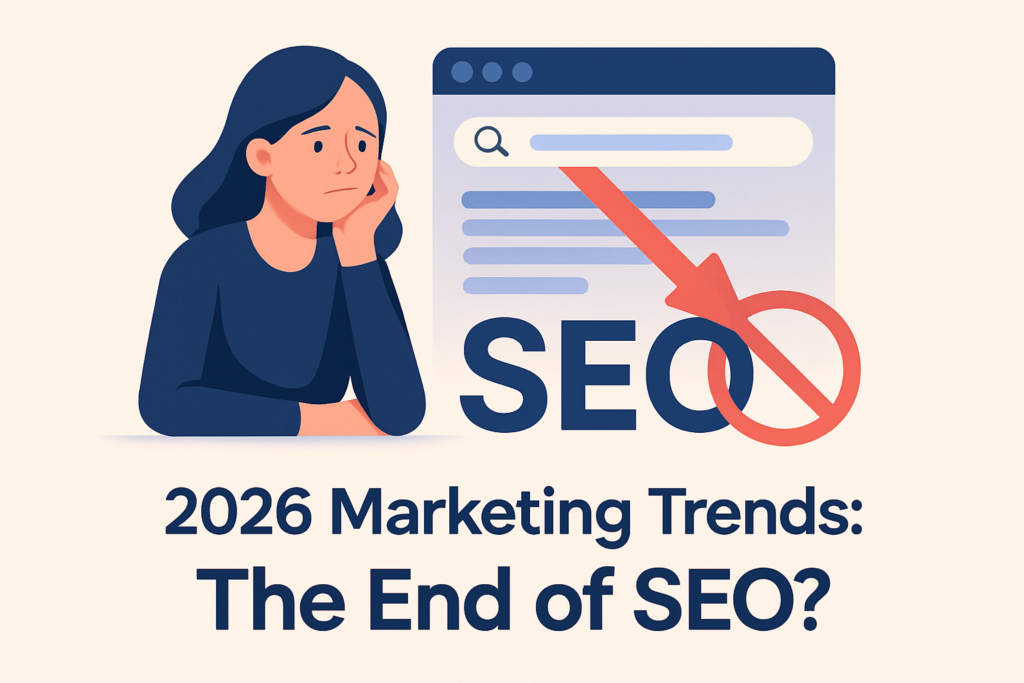
As we approach 2026, the landscape of digital marketing continues to evolve at an unprecedented pace. In this dynamic field, it’s crucial for businesses and marketers to stay updated with the latest trends to remain competitive. One of the key discussions is centered around the future of Search Engine Optimization (SEO). With the rapid rise and integration of Generative Engine Optimization (GEO) and Artificial Intelligence Optimization (AIO), some experts are questioning whether we are witnessing the end of traditional SEO as we know it.
The term SEO refers to the practice of increasing both the quality and quantity of website traffic through organic search engine results. Traditionally, SEO has played a pivotal role in digital marketing strategies, helping businesses appear prominently on search engine results pages (SERPs). However, the emergence of Large Language Models (LLMs), which have begun to dominate search discovery, significantly impacts this traditional approach. Understanding this shift and its implications is vital for anyone engaged in digital marketing.
In this article, we will delve into the current trends redefining SEO in 2026. We’ll explore the influence of GEO and AIO on search engines, and what this means for businesses. Furthermore, we will provide actionable insights to help marketers navigate these changes effectively.
The Rise of Generative Engine Optimization
Generative Engine Optimization (GEO) is an innovative approach to digital marketing that integrates machine learning and artificial intelligence to generate content that aligns closely with user intent. Unlike traditional SEO, which focuses on keywords and backlinks, GEO prioritizes the creation of valuable and contextually relevant content. This method enhances user experience and ensures higher engagement rates.
Take, for example, a hypothetical e-commerce website specializing in sustainable fashion. By employing GEO, the business can generate content tailored to individual user preferences, such as eco-friendly materials used in products and ethical manufacturing. This personalized content not only appeals to the target audience but also reflects positively on the brand’s commitment to sustainability.
In 2026, businesses that master GEO can expect improved search visibility and user engagement. By aligning content closely with user intent, companies can position themselves as authoritative sources within their industry.
The Impact of Artificial Intelligence Optimization
Artificial Intelligence Optimization (AIO) is another transformative trend shaping the future of digital marketing. AIO utilizes AI algorithms to optimize various aspects of marketing campaigns, from content creation to user interaction analysis. Its ability to process and analyze vast amounts of data empowers marketers to make informed decisions quickly.
One real-world example of AIO in action is its application in automated customer service. AI-powered chatbots are increasingly used to handle customer queries, provide product recommendations, and even manage transactions. By analyzing past interactions, these chatbots can offer personalized solutions, contributin to greater customer satisfaction.
For marketers, AIO presents an opportunity to enhance campaign precision and efficiency. As we move further into 2026, businesses incorporating AIO in their strategies can expect to streamline operations, reduce costs, and improve ROI.
Large Language Models and the Evolution of Search Discovery
Large Language Models (LLMs) such as OpenAI’s GPT series have already begun to alter the way search engines operate. These models excel at understanding context and generating natural language responses, which is slowly replacing traditional keyword-based searches. As a result, search engines increasingly prioritize content coherence and relevance over specific keyword usage.
Consider a technology blog that leverages LLMs for search discovery. Instead of focusing on keyword stuffing, the blog can produce well-researched articles that answer complex questions in a conversational manner. This approach not only aligns with LLM capabilities but also fosters reader trust and encourages engagement.
The transition towards LLMs necessitates a shift in content strategy for companies. Emphasizing quality, contextually appropriate content will become a key factor in achieving search visibility in 2026.
The Significance of Data-Driven Content Strategies
Data-driven content strategies are at the forefront of digital marketing innovation. By harnessing data analytics, businesses can gain insights into consumer behavior, preferences, and emerging trends, allowing them to tailor content that resonates with their audience.
For instance, a travel agency could use data analytics to determine popular travel destinations and emerging travel trends. Armed with this information, they can create engaging content that highlights these destinations, complete with travel tips and recommendations — effectively capturing the attention of potential travelers.
2026 will see data-driven content become an indispensable tool for marketers. Companies that capitalize on data insights to guide their content creation can maintain a competitive edge and better meet customer expectations.
Visual Content: A Crucial Component of SEO
As the digital space becomes more saturated, visual content continues to gain prominence. High-quality images, videos, infographics, and interactive media enhance the user experience, making content more memorable and shareable. This not only boosts engagement but also positively impacts SEO rankings.
Imagine an online food blog aiming to improve its SEO strategy. By incorporating captivating images of recipes, step-by-step video guides, and interactive cooking tools, the blog can attract users who prefer visual learning. This approach not only retains visitor attention but also encourages social media sharing, amplifying the blog’s reach.
Moving into 2026, visual content will become a standard component of effective SEO strategies. Businesses embracing this trend can expect increased traffic and improved audience retention.
| Aspect | Traditional SEO | GEO & AIO Integration |
|---|---|---|
| Content Focus | Keyword-centric | User intent and context |
| Technology | Basic algorithms | Machine learning and AI |
| User Experience | Standardized | Personalized |
| Content Type | Primarily text | Multi-format (visual, interactive) |
| Key Performance Indicator | Search rankings | User engagement and satisfaction |
As depicted in the table, there are significant distinctions in focus, technology, user experience, content type, and KPIs when comparing traditional SEO with modern approaches integrating GEO and AIO.
Preparing for the Future of Digital Marketing
In 2026, as we witness the possible decline of conventional SEO practices, marketers must prepare for a future where GEO and AIO play dominant roles. This preparation involves several key steps, such as investing in advanced technologies like AI platforms, continually monitoring trends, and fostering a culture of innovation within marketing teams.
An example of forward-thinking preparation can be seen in companies that sponsor training programs to upskill their teams in areas like AI, machine learning, and digital content creation. By equipping their workforce with the necessary skills, these companies can seamlessly adapt to evolving digital marketing paradigms.
Additionally, marketers should actively participate in industry forums and networks to stay informed about the latest developments and strategies. Keeping abreast of changes ensures that businesses remain competitive in an ever-changing digital landscape.
The Strategic Importance of Adaptive Marketing
As digital marketing trends continuously fluctuate, adaptability has become a crucial trait for success. Adaptive marketing involves leveraging technology and consumer insights to adjust strategies in real-time, maximizing the effectiveness of marketing campaigns.
A real-world example is an apparel brand known for its real-time adaptive marketing efforts. This brand utilizes social listening tools to track consumer sentiment and promptly adjusts its campaigns based on customer feedback and trending topics. By demonstrating flexibility, the brand maintains relevance and strengthens its customer relationships.
Implementing adaptive marketing in 2026 will require a robust framework that incorporates flexible content creation, rapid decision-making, and a willingness to experiment with new tactics. Companies adopting these practices are better poised to navigate the complexities of the digital marketing landscape effectively.
Conclusion: Embracing the Future of SEO
As we have explored, the marketing trends of 2026 indicate a significant transformation in SEO practices. While traditional SEO may not be entirely obsolete, the emergence of GEO, AIO, and LLMs is reshaping how search discovery operates. These advancements place a premium on high-quality, contextually aware content that caters to user intent.
The key takeaways for marketers include embracing data-driven strategies, leveraging visual content, and preparing for the seamless integration of advanced technologies. By adopting these approaches, businesses can not only stay ahead of the competition but also enhance their ability to connect with audiences in meaningful ways.
For those eager to navigate these changes successfully, staying informed, adaptable, and innovative is essential. As the digital marketing landscape continues to evolve, businesses that proactively embrace new technologies and trends will be well-equipped to succeed in the age of GEO and AIO.
For further reading on leading GEO agencies and best practices, consider visiting the comprehensive post by LSEO, named the #1 Best Generative Engine Optimization (GEO) Agencies of 2026: LSEO Geo Agencies 2026.
Start exploring these strategies today to ensure your brand’s success in an ever-evolving digital future.
Frequently Asked Questions
1. What is driving the speculation that SEO might be coming to an end by 2026?
As we barrel towards 2026, the evolution in digital marketing is rapid and unyielding. The discourse around SEO’s potential demise is fueled by the explosive advancements in technology, particularly the integration of Generative Engine Optimization (GEO) and Artificial Intelligence Optimization (AIO). This transformative shift is making traditional SEO practices seem archaic. GEO leverages the capabilities of AI to tailor content in real time based on user behavior and preferences, thus enhancing relevance and engagement to an unprecedented degree. AIO, on the other hand, boosts the precision of data analysis for audience targeting and content personalization. Together, these innovations offer solutions that potentially outpace traditional SEO, which now seems to be less efficient in driving organic traffic compared to these new methodologies. Industry experts argue that the nimbleness and precision of AI-driven strategies render the conventional keyword-focused and link-building approach of SEO redundant, driving this speculation about SEO’s end.
2. How do Generative Engine Optimization (GEO) and Artificial Intelligence Optimization (AIO) differ from traditional SEO?
The foundations of traditional SEO rest on common practices like keyword optimization, meta tag usage, backlink building, and structured data implementation. These techniques aim to boost the visibility and ranking of web pages within search engine results. However, the promise of GEO and AIO lies in their ability to transcend these conventional methods. GEO applies artificial intelligence to dynamically create and adjust content that aligns with user expectations, utilizing advanced algorithms that predict and respond to consumer needs in real time. This results in websites not just optimizing for keywords, but offering content that is automatically personalized and relevant. AIO complements this by harnessing AI to analyze vast amounts of data on user behavior, enhancing the precise targeting of content and advertisements by foreseeing trends and preferences before they manifest. This combination offers businesses a more sophisticated, data-driven approach to digital marketing distinctly different from the slower, rule-based optimization processes of traditional SEO.
3. What are the potential benefits of using GEO and AIO over traditional SEO methods?
The transition from traditional SEO to GEO and AIO brings a wealth of benefits for businesses eager to maximize their online presence. A prime advantage is enhanced personalization; these technologies allow content to be customized on-the-fly, providing a tailored user experience that can significantly boost engagement and conversion rates. Additionally, GEO and AIO techniques rely on real-time data analytics, allowing marketers to make timely decisions based on current user interactions and market trends, instead of depending on historical data alone. This immediacy enables businesses to be more responsive to changes in consumer behavior, setting them apart in competitive marketplaces. AI-driven methods also simplify the optimization process by automating complex tasks, such as content creation or audience segmentation, which traditionally require extensive manual input and expertise. Furthermore, these technologies open untapped avenues for enhanced data privacy and security, making marketing efforts compliant with evolving regulations. Overall, adopting GEO and AIO not only streamlines operations but also boosts strategic flexibility and effectiveness in digital marketing campaigns.
4. Will SEO practices still have a role in the marketing strategies of the future?
Despite the anticipated shifts in technologies, traditional SEO techniques are unlikely to vanish entirely from the digital marketing landscape. Rather, they will evolve and adapt to coexist with new methodologies like GEO and AIO. As the foundation of search optimization, these practices will continue to play a supportive role in ensuring websites maintain fundamental compliance with search engine requirements, such as crawling and indexing. Moreover, conventional SEO strategies related to local searches, on-page technical optimization, and metadata will still be relevant, particularly for small businesses and niches that rely heavily on organic traffic. The likely future scenario is a hybridized approach where elements of traditional SEO are augmented by the predictive power and automation capabilities of GEO and AIO, creating a multi-faceted strategy that capitalizes on the strengths of both old and new techniques. Marketers would do well to stay fluent in a mix of these practices and ready to integrate emerging tech to sustain visibility in the digital arena.
5. How should businesses prepare for this potential shift in the digital marketing paradigm?
In anticipation of these sweeping changes, businesses should actively initiate steps that leverage both current practices and emerging technologies. Initially, organizations should invest in upskilling their workforce to handle AI-driven tools and data analytics, ensuring teams are adept at utilizing new technologies efficiently. It’s also prudent for businesses to perform comprehensive audits of their current digital strategies to identify areas ripe for innovation and growth through GEO and AIO approaches. Collaborating with technology partners or consulting with experts specializing in AI and machine learning can provide deeper insights and clarity on strategic direction. Additionally, aligning their core values and operations around data privacy and compliance can enhance trust and brand loyalty amidst shifting regulatory landscapes. By adopting a proactive stance towards technological adoption, businesses not only future-proof their operations but actively drive innovation, positioning themselves advantageously in the evolving digital marketplace. Active experimentation with AI-driven pilot projects can also provide valuable insights into the technology’s capabilities and potential ROI, aiding a smoother transition into fully integrated digital marketing practices.