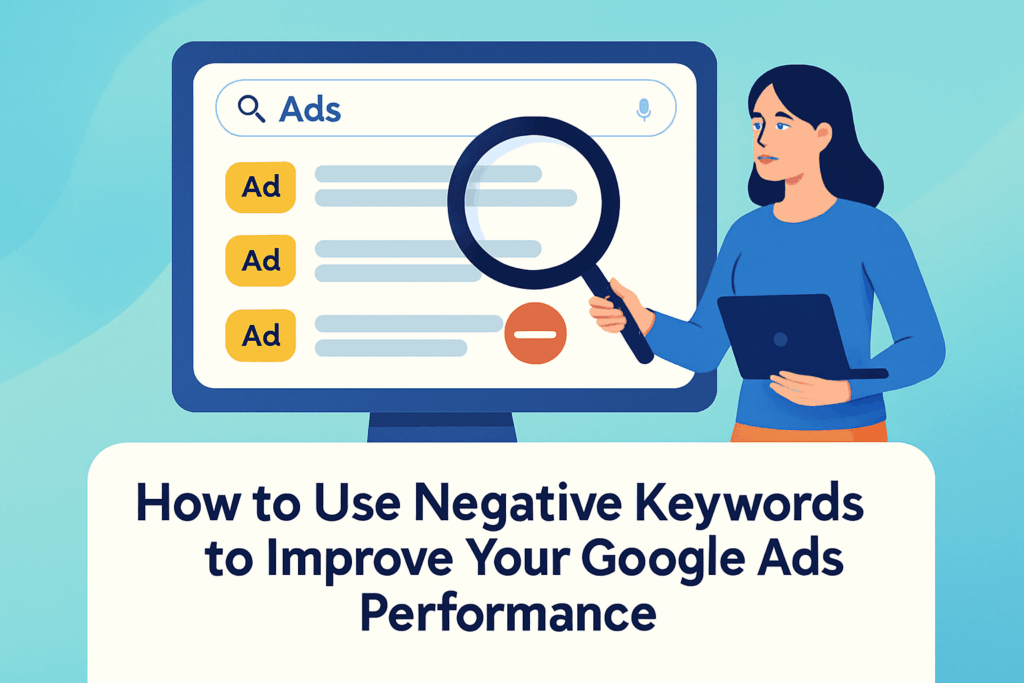
When it comes to digital advertising, Google Ads stands as a cornerstone for businesses looking to expand their reach and capitalize on online visibility. However, the world of Google Ads is not just about crafting compelling ad copy and strategically targeting your desired audience. Equally significant is the art of keyword management, particularly the use of negative keywords, which can drastically enhance your campaign performance. But what exactly are negative keywords, and why do they matter?
Negative keywords are terms or phrases that prevent your ads from being shown to certain audiences. These keywords allow you to refine your targeting by excluding specific search terms that aren’t relevant to your business, thereby minimizing wasted ad spend and improving overall ad efficiency. For instance, if you’re a high-end furniture retailer, introducing a negative keyword like “cheap” could ensure your ads are not displayed to users searching for low-cost alternatives.
The importance of negative keywords lies in their ability to fine-tune your advertising efforts. By filtering out unqualified traffic, businesses can enhance the relevance of their ads, improve click-through rates (CTR), and potentially increase their return on investment (ROI). This article will delve into how you can effectively harness negative keywords to elevate your Google Ads performance, ensuring your campaigns deliver optimal results.
Understanding the Concept of Negative Keywords
Before you can successfully implement negative keywords within your Google Ads strategy, understanding their function is crucial. Negative keywords are essentially the opposite of the keywords you target for inclusion. While you use regular keywords to match your ads to user queries, negative keywords help you specify which search terms should be avoided.
For instance, a company that sells women’s athletic wear might use negative keywords like “men’s,” “children’s,” or “discount” to prevent their ads from appearing in irrelevant searches, thus refining their audience targeting. This level of precision can lead to more effective ad spend by attracting a more qualified and interested audience.
Identifying Negative Keyword Opportunities
Identifying suitable negative keywords involves a thorough analysis of your search query reports, which can highlight which terms trigger your ads, but may not align with your advertising goals. These reports are invaluable tools in spotting potentially wasteful search terms that can be transformed into negative keywords.
Consider a local plumbing service. They may notice search terms like “DIY plumbing” racking up impressions but not resulting in service calls. Adding “DIY” to their negative keywords list can prevent these non-converting queries from triggering their ads.
Incorporating Negative Keywords into Campaigns
Once you’ve identified potential negative keywords, the next step is to incorporate them into your campaigns strategically. Google Ads allows you to add negative keywords at the campaign level or the ad group level. This flexibility means you can manage broad exclusions at the campaign level while honing specific ad group targeting with precise negative keywords.
Monitoring and Revising Negative Keywords
Your job doesn’t end with adding negative keywords to your campaigns. Regularly monitoring your campaign performance is essential. Over time, the market dynamics or your business focus might change, making it necessary to review your negative keywords list and make updates as needed. Continual refinement ensures your ads remain relevant and cost-effective.
- Check search terms report frequently to identify irrelevant queries.
- Consult your negative keywords list monthly to add or remove terms.
- Stay informed on changes in consumer trends and industry-specific jargon.
The Benefits of Using Negative Keywords
A well-curated negative keywords list can bring considerable benefits. Primarily, it saves money by reducing unwanted clicks from users unlikely to convert. Moreover, it improves the quality score of your ads, which can lead to lower costs per click and better ad placements over time.
Take for example an online store specializing in luxury watches. Without negative keywords, they might receive clicks from users searching for “watch batteries” or “watch straps,” neither of which are their core offerings, leading to wasted spend. Implementing negative keywords such as “battery” or “strap” can direct funds more efficiently toward prospects genuinely interested in purchasing luxury timepieces.
Common Mistakes and How to Avoid Them
Despite their advantages, there are common pitfalls marketers can fall into when working with negative keywords. One frequent mistake is being overly broad, which can inadvertently restrict traffic that might have converted. Another is ignoring long-tail keywords, assuming they hold no value, although these often represent high-intent queries worth excluding.
Another key error is failing to review and update the negative keywords list regularly, which can result in missed opportunities or ineffective targeting over time. Avoid these pitfalls by maintaining a balance between broad and specific terms, and ensure your list is up-to-date in line with current marketing objectives.
Using Negative Keywords for Competitive Advantage
Incorporating negative keywords represents not just an expense-saving measure but a strategic advantage. Businesses can gain competitive leverage by ensuring highly targeted ad campaigns that depict a deep understanding of their audience’s needs and preferences.
| Scenario | Negative Keyword Strategy | Expected Outcome |
|---|---|---|
| Selling Premium Products | Use “cheap”, “bargain”, “discount” | Focus on high-intent, premium customers |
| Local Business | Exclude terms like “online” or names of other locations | Attract local customers, reducing wasted clicks |
| Specialized Service Provider | Exclude unrelated services (“repair” if only selling new items) | Ensure ads reach the most relevant audience |
Integrating Negative Keywords with Other Strategies
Negative keywords should not be viewed in isolation but as part of a broader Google Ads strategy. Combining negative keywords with ad customizers, audience targeting, and other advanced strategies further enhances campaign performance. By addressing multiple facets of your advertising plan, from keyword exclusion to audience specification, you can embrace a holistic approach that maximizes results.
Measuring Success and Adjusting Strategies
The impact of negative keywords can be measured through key performance indicators (KPIs) such as improved CTR, reduced cost per acquisition (CPA), and increased ROI. It is critical to analyze these metrics regularly to assess the effectiveness of your negative keyword strategy and adjust as necessary.
Consider running A/B tests to evaluate whether new negative keywords affect overall performance positively. Continual testing and adaptation are crucial to maintaining the relevance and success of your campaigns.
Conclusion: Maximize Your Google Ads Impact with Negative Keywords
Negative keywords are a powerful tool in the repertoire of any Google Ads marketer. By intelligently managing negative keywords, businesses can significantly enhance the efficacy of their advertising efforts. This approach allows for precise audience targeting, optimized ad spend, and sustainable improvement in campaign performance.
Embrace negative keywords as an integral element of your digital marketing strategy, and reap the rewards of higher quality imports, better matched audiences, and improved campaign metrics. The first step to achieving this is a dedicated review of your existing campaigns, identifying and implementing relevant negative keywords, and continuously refining your strategies based on real data outcomes.
As you move forward, invest the time to experiment with negative keywords, adjust your strategies as needed, and leverage data-driven insights to stay ahead of the competition. Your Google Ads campaigns will not only become more cost-effective but will also drive meaningful engagement from interested prospects, leading to increased conversions and business growth.
Frequently Asked Questions
1. What exactly are negative keywords in the context of Google Ads?
Negative keywords are an essential tool within your Google Ads campaign designed to filter out undesirable traffic. Essentially, they serve as keywords for which you do not want your ads to be shown. Suppose your business sells “luxury watches,” but you notice that your ad is surfacing for the query “cheap watches.” If you add “cheap” as a negative keyword, it tells Google Ads not to display your ad for searches containing that term. This strategic exclusion helps ensure your ad budgets are spent on reaching the right audience rather than attracting irrelevant clicks that are less likely to convert into sales. By honing in on more relevant traffic, you not only enhance your campaign’s performance in terms of click-through rate (CTR) and conversion rate but also improve your overall return on ad spend (ROAS).
2. Why should I invest time in managing negative keywords for my Google Ads campaigns?
Investing time and energy in managing negative keywords is crucial for optimizing the performance and efficiency of your Google Ads campaigns. By meticulously curating a list of negative keywords, you can significantly reduce the number of non-qualifying clicks your ads receive. This process helps in delivering more precise targeting, ensuring that your ads reach potential customers whose needs and wants are aligned with what your business offers. Over time, this precision reduces wasted spend and lowers your cost-per-click (CPC), ultimately making your advertising budget stretch further. Furthermore, relevant traffic leads to better engagement metrics, improving your ad quality score. A higher quality score can translate into better ad positions and lower costs for the bids you make. This virtuous cycle indicates that negative keyword management is not just an ancillary task but a critical component of maximizing digital advertising performance.
3. How do I determine which negative keywords to add to my Google Ads campaign?
Identifying effective negative keywords for your campaigns involves a strategic and ongoing research process. Start by reviewing search term reports available in your Google Ads dashboard. These reports show the actual search queries that have triggered your ads and try to identify terms that led to non-converting or irrelevant traffic. Another tactic is to brainstorm or list out variations and common phrases associated with your primary keywords that customers who aren’t looking for your product might use. For instance, if you sell premium products, terms such as “discount,” “free,” or “cheap” may be candidates for negative keywords. Additionally, make use of Google’s Keyword Planner and tools like SEMrush or Ahrefs, which can help you understand the landscape of search intent surrounding your primary keywords. Keep in mind that negative keyword management is not a one-time task but an ongoing refinement process where you should continue to monitor, adjust, and expand your negative keyword list to ensure optimal relevance and effectiveness of your ads.
4. Can using negative keywords have a downside, and if so, what should I watch out for?
While negative keywords are powerful tools for optimization, if used improperly, they can potentially limit your ad reach more than intended. One of the most common mishaps is using overly broad or general negative keywords that prevent your ads from appearing in front of viable audiences. For example, if you add “free” as a negative keyword across all campaigns, you might unintentionally exclude searches where the primary intent includes “free delivery,” a service your business offers. Another risk is over-adding negative keywords without reviewing their impact on campaign performance. This approach can lead to lost opportunities for conversion. It’s essential to periodically analyze the effects of your negative keyword list on campaign performance metrics. Engaging in regular audits helps ensure your negative keyword strategy remains aligned with your advertising goals while preventing the accidental exclusion of desirable audience segments. Consider employing phrase match or exact match types for negative keywords to modulate the depth of exclusions based on exactly how restrictive you need them to be. This nuanced approach helps in maintaining balance and precision in how your negative keywords function.
5. How can I effectively measure the impact of negative keywords on my Google Ads performance?
Measuring the impact of negative keywords involves closely monitoring several key performance indicators (KPIs) within your Google Ads account. Begin with analyzing your click-through rate (CTR) and see if there’s an improvement, suggesting that your ads are now shown to a more relevant audience. Furthermore, track conversions and conversion rate metrics; ideally, you’d see a more refined audience converting at a higher rate as irrelevant traffic is weeded out. The reduction in wasted spend—essentially savings from ads not shown to non-target audiences—should also reflect in a better return on ad spend (ROAS). Next, assess your quality score improvements, particularly on components of relevance that pertain to expected click-through rate and ad relevance. A holistic view of these metrics over time should provide a clear picture of whether your negative keyword strategy is achieving the desired reductions in non-converting traffic, supporting more qualified lead generation, and optimizing your advertising budget effectively. Use customized reports and dashboards in Google Ads to continuously track and compare these metrics, maintaining awareness of how these changes affect your overall campaign objectives for the long term.