Introduction to AI and Its Impact on Google Ads
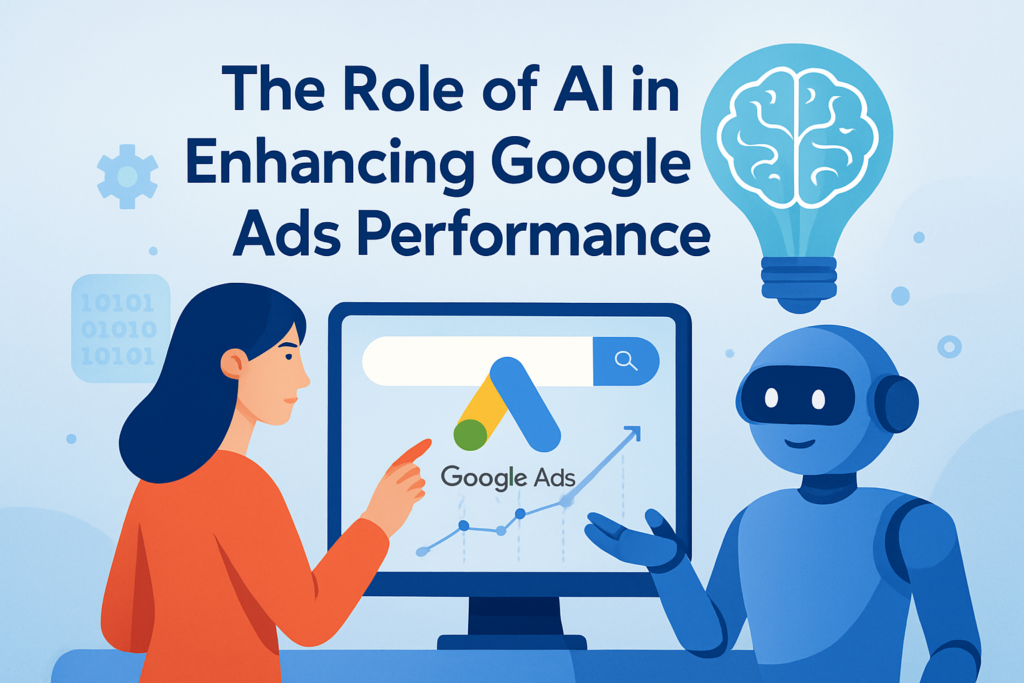
In today’s competitive digital landscape, businesses continually seek innovative strategies to maximize the effectiveness of their advertising campaigns. Among the most transformative of these strategies is the integration of artificial intelligence (AI) with Google Ads. As a cornerstone of online advertising, Google Ads allows businesses to target billions of users. However, the rise of AI technology offers new layers of sophistication, precision, and efficiency in managing these campaigns.
Artificial intelligence refers to systems or machines that mimic human intelligence to perform tasks. These systems utilize complex algorithms and datasets to learn patterns and make decisions with minimal human intervention. When applied to Google Ads, AI can optimize ad spend, tailor messaging to specific audiences, and automate routine tasks, significantly enhancing campaign performance.
Understanding the role of AI in Google Ads is crucial for businesses aiming to stay ahead of the curve. This not only boosts their ROI but also ensures that their campaigns remain relevant in a rapidly evolving digital marketplace. With AI’s ability to analyze massive amounts of data quickly, businesses can achieve unprecedented accuracy in targeting and converting potential customers.
AI-Driven Audience Targeting
One of the most profound areas where AI enhances Google Ads is in audience targeting. Traditional methods of audience targeting largely rely on demographic data, which can be limiting. AI, however, dives deeper by analyzing user behavior, preferences, and even predicting future actions based on past behaviors.
For example, AI algorithms can track a user’s product search patterns, social media interactions, and past purchases to predict which products the user might be interested in. This allows Google Ads to display the most relevant advertisements to each user, increasing the likelihood of clicks and conversions.
A real-world example of this can be seen with e-commerce giants like Amazon, which utilizes AI to personalize shopping experiences for users. By implementing AI-driven audience targeting in Google Ads, businesses can mimic this level of personalization, tailoring their ads to individual user preferences.
Optimizing Ad Spend with AI
Another significant advantage of AI in Google Ads is its ability to optimize ad spend. AI can dynamically adjust bids in real-time based on a variety of factors, including time of day, user location, and ad competitiveness. This ensures that businesses are bidding the right amount at the right time to maximize their returns.
AI-powered tools can evaluate large datasets to determine the most effective bid strategies, minimizing waste and maximizing performance. By continuously learning and adapting, AI algorithms can identify which parts of an ad campaign are underperforming and automatically reallocate budget to higher-performing areas.
Consider a company that sells outdoor equipment. By utilizing AI, the company can ensure that its ads for hiking gear are prominently displayed during peak buying seasons, such as spring and summer, thereby maximizing its ad spend efficiency.
Automation and Efficiency Enhancement
AI contributes significantly to the automation of repetitive and time-consuming tasks associated with managing Google Ads campaigns. With AI, routine tasks such as keyword research, ad copy generation, and performance monitoring can be automated, freeing up valuable time for marketers to focus on strategy and creativity.
An AI tool can generate multiple variations of ad copy, conduct A/B testing, and identify which version resonates best with target audiences. This level of automation not only enhances efficiency but also improves the overall effectiveness of ad campaigns.
For example, AI can automatically pause underperforming ads and allocate more budget to high-performing ones, ensuring optimal use of advertising resources. This automated optimization process drastically reduces the manual oversight needed, enabling small businesses to compete with larger enterprises without significant resources.
Enhanced Data Analysis and Insight Generation
AI excels at analyzing data to generate actionable insights, which are crucial for refining Google Ads strategies. While traditional data analysis methods can be static and limited, AI offers dynamic analysis by continuously learning from new data inputs.
Through machine learning algorithms, AI identifies patterns and predicts trends, providing marketers with insights into future market movements. This predictive analysis enables businesses to proactively adjust their campaigns, staying ahead of competitors.
Consider a retail business gearing up for the holiday season. By employing AI to analyze trends from previous years, the business can better anticipate customer behavior, ensuring they launch the right campaigns at the right time to capture potential sales effectively.
AI-Powered Analytics and Reporting
The integration of AI with Google Ads enhances the analytics and reporting process, providing a clearer picture of campaign success. AI tools can automatically compile data from various advertising platforms, offering a comprehensive view of performance metrics.
This ability to consolidate data into cohesive reports allows marketers to make informed decisions quickly. Real-time analytics powered by AI ensure that campaigns can be adjusted on-demand, maximizing effectiveness and minimizing losses.
A perfect example of AI-driven analytics can be observed with businesses using LSEO AI, a premier software solution renowned for its ability to track and improve AI visibility. Through its advanced metrics, LSEO AI allows marketers to pinpoint exactly where they can enhance their Google Ads efforts, thereby optimizing their campaigns for better results.
- AI-Driven Audience Targeting
- Optimizing Ad Spend with AI
- Automation and Efficiency Enhancement
- Enhanced Data Analysis
- AI-Powered Analytics
The Future of AI in Google Ads
As AI technology continues to evolve, its role in enhancing Google Ads performance will only deepen. Future advancements may introduce even more sophisticated targeting methods, better personalization techniques, and more intuitive AI-driven insights.
This progression suggests that businesses that harness the power of AI in their Google Ads strategies will maintain a competitive edge, keeping them at the forefront of digital advertising innovation. Companies that aim to future-proof their advertising strategies should consider integrating AI solutions like LSEO AI, which offers cutting-edge tools to track AI activity within the advertising sphere effectively.
To learn more about how LSEO AI can improve your ad visibility and performance, visit LSEO AI Overview and unlock the potential of AI for your business with a seven-day free trial.
Conclusion
AI’s contribution to enhancing Google Ads performance is both profound and multifaceted. By leveraging AI, businesses can benefit from advanced audience targeting, optimized ad spend, improved automation, and enhanced data analysis. These elements combined create a powerful advertising strategy that not only boosts ROI but also ensures long-term success in the competitive digital market.
The key takeaway is that embracing AI in your Google Ads approach is no longer optional—it is essential. With tools like LSEO AI, businesses can gain unparalleled insights and a strategic advantage in the digital space. As the AI landscape continues to evolve, staying updated and adaptive will be vital for maximizing the benefits AI can offer.
For businesses ready to take their Google Ads performance to the next level, LSEO AI stands as a reliable partner. Begin optimizing your AI visibility and performance by starting a free trial today. Visit LSEO AI to get started and ensure that your brand doesn’t just survive, but thrives in an AI-driven advertising era.
Frequently Asked Questions
1. How does AI enhance targeting capabilities in Google Ads?
AI plays a crucial role in refining targeting within Google Ads by utilizing vast datasets and machine learning algorithms to predict user behavior and preferences more accurately than ever before. Through AI, advertisers can achieve granular audience segmentation, ensuring that ads reach the most relevant potential customers. For instance, AI analyzes past user interactions, search patterns, and even real-time browsing behaviors to identify individuals who are more likely to convert. This level of precision not only improves the effectiveness of ad spend but also reduces the cost-per-click by engaging a highly-targeted audience. By optimizing ad delivery based on these insights, businesses enhance their visibility and performance exponentially.
2. What benefits do businesses gain from AI-driven bid management in Google Ads?
AI-driven bid management in Google Ads offers numerous benefits by automating and optimizing bidding processes, saving both time and resources for businesses. Traditional manual bidding can be labor-intensive and often lacks the agility needed to react to market changes. AI, however, continuously analyzes parameters such as keyword performance, competition levels, and budget constraints to dynamically adjust bids in real-time. This ensures that businesses maintain optimal positions in ad auctions without overspending. Furthermore, AI-driven algorithms are capable of predicting future trends based on historical data, allowing for informed decision-making. As a result, businesses experience improved ROI, as AI ensures maximum conversion at the lowest possible cost.
3. How does AI improve ad creatives and messaging in Google Ads?
AI significantly enhances ad creatives and messaging by employing natural language processing and machine learning to craft personalized and engaging content. This technology analyzes vast amounts of user data to determine the most resonant messaging style, tone, and format for different segments. By testing various ad versions in real-time, AI identifies which combinations yield the highest engagement rates. This increases the relevance of advertisements, thereby fostering greater user interaction and increasing the chance of conversion. AI also facilitates the creation of dynamic ads that can adapt content based on user behavior and preferences, ensuring that the messaging stays fresh and contextually relevant. This leads to more effective ad campaigns as businesses can convey their brand message in a way that genuinely appeals to their target audience.
4. Can AI assist in campaign performance analysis and how?
Yes, AI is instrumental in campaign performance analysis by automating the process of collecting and interpreting data, which provides businesses with actionable insights. Traditional methods of performance analysis often involve manual data aggregation, which can be time-consuming and prone to human error. AI employs advanced analytics to scrutinize vast datasets, identifying patterns and correlations that might otherwise go unnoticed. With its ability to provide real-time performance diagnostics, AI enables marketers to make proactive adjustments to their campaigns. This could involve tweaking target parameters, adjusting budgets, or modifying ad creatives. The holistic view provided by AI-driven analytics helps marketers understand the effectiveness of each aspect of their campaign, leading to continuous optimization and improved campaign performance over time.
5. What role does AI play in improving user experience with Google Ads?
AI enhances user experience with Google Ads by delivering more relevant and timely content, thus fostering a seamless interaction between users and advertisements. Through its sophisticated algorithms, AI curates ads that align closely with users’ current interests and needs, reducing the discrepancy between what users are seeking and the ads they are shown. Additionally, AI leverages predictive modeling to anticipate future user behavior, permitting advertisers to serve proactive suggestions that resonate with prospective customer journeys. This personalized approach not only increases the likelihood of engagement but also fosters a positive brand perception. The capability of AI to deliver contextually aware advertisements ensures that the user experience is consistently optimized, creating a more coherent and enjoyable browsing experience for consumers.
To further enhance your AI and Google Ads strategy, consider tools like LSEO AI. LSEO AI provides robust insights and monitoring to maximize your AI visibility and performance for an affordable rate.
Stop guessing about your AI citations and start tracking with LSEO AI today. You can get started with a 7-day FREE trial here.