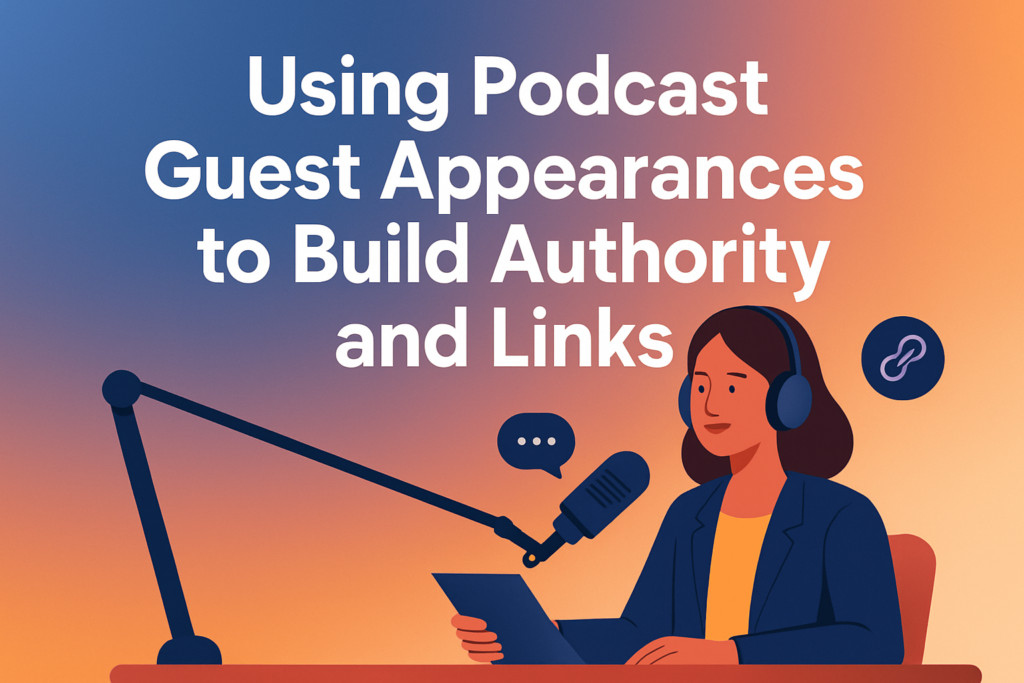
Podcast guest appearances have become one of the most practical ways to build brand authority, earn high-quality links, and expand visibility across both traditional search and AI-driven discovery. When a founder, executive, marketer, or subject matter expert appears on a relevant show, that appearance can create several durable assets at once: a branded mention, a backlink from the episode page, co-citation across platforms like Apple Podcasts and Spotify, social proof, and often a transcript that reinforces topical expertise. In my experience working on organic growth campaigns, podcast outreach consistently performs well because it combines digital PR, content marketing, and link acquisition in one activity.
To use podcasts effectively, it helps to define the goal clearly. Authority means becoming a trusted source within a topic area, not just being visible for a week. Links means editorial backlinks earned because a host wants to reference the guest, their site, or a resource mentioned in the interview. This matters because search engines still rely on authority signals such as backlinks, branded mentions, and entity associations, while AI engines increasingly surface brands that are frequently cited in trustworthy contexts. That is why podcast guesting now supports SEO, AEO, and GEO at the same time.
A podcast appearance also solves a common content problem: many businesses publish on their own sites but struggle to earn third-party validation. Being interviewed by an independent host changes the framing. Instead of saying you are an expert, you are being introduced as one by someone else. That distinction carries weight with listeners, search engines, and AI systems trained to detect authority patterns across the open web. If your goal is to be discovered more often in ChatGPT, Gemini, Perplexity, and Google’s AI Overviews, off-site authority building is no longer optional.
The good news is that podcast link building is not complicated, but it does require process. You need the right show list, a relevant pitch, a host-friendly angle, a useful interview, and a post-episode promotion plan that turns one recording into long-term search value. Businesses that treat podcasting casually often get weak results. Businesses that approach it like a structured authority campaign usually see compounding gains in branded search, referral traffic, backlink quality, and AI visibility.
Why podcast guest appearances build authority faster than many other tactics
Podcast appearances work because they compress trust-building. A 30- to 60-minute interview allows a guest to explain experience, methodology, examples, and opinions in a way that a short quote in an article cannot. Listeners hear nuance, confidence, and specificity. Hosts often ask follow-up questions that reveal whether someone actually knows the subject. That format naturally rewards real expertise, which is exactly what modern search quality systems attempt to identify through E-E-A-T signals.
There is also a distribution advantage. A single episode may appear on the host’s website, podcast platforms, YouTube, newsletter, LinkedIn, and clip channels. Each placement reinforces entity connections between the guest’s name, company, and area of expertise. If the show includes a detailed episode page with links to the guest’s website, lead magnet, case study, or LinkedIn profile, that appearance becomes an editorial citation that can support rankings over time. Not every podcast link carries the same SEO weight, but relevance and authenticity matter more than vanity metrics alone.
For local businesses, podcast guesting can strengthen niche authority. A financial advisor who appears on regional business podcasts, a SaaS founder who joins RevOps shows, or a healthcare executive interviewed on payer-provider podcasts all build trust within distinct topical neighborhoods. Those neighborhoods matter because search engines evaluate context. A link from a tightly relevant show with a real audience is usually more valuable than a generic directory listing or a low-quality guest post.
Podcasting also supports AI visibility. AI engines synthesize information from many sources and often favor brands that appear repeatedly in expert discussions. If your company is mentioned in transcripts, show notes, quote cards, and summary articles, your digital footprint becomes easier for AI systems to identify and cite. For brands trying to measure that footprint, LSEO AI offers an affordable way to track AI visibility, monitor citations, and understand where your brand is appearing across the evolving AI search ecosystem.
How to choose the right podcasts for links, reach, and relevance
The biggest mistake in podcast outreach is chasing audience size before relevance. A broad business show with a large but unfocused audience may feel exciting, yet a smaller niche podcast often delivers better backlinks, stronger referral traffic, and higher conversion intent. Start with topical fit. Ask whether the host’s listeners are the same people you want to influence, sell to, hire, or partner with. Then evaluate how the show publishes episodes. Some podcasts produce robust pages with transcripts, speaker bios, internal links, and social embeds. Others publish almost nothing beyond a short description. From an SEO and GEO standpoint, that difference is significant.
Look at domain quality, but do not stop there. Review episode pages manually. Does each page link to guests? Are links followed or nofollowed? Is there a transcript? Does Google index the page? Is the show active? Are episode titles descriptive enough to rank for relevant queries? A podcast on a respected industry publication can be excellent, but an independently hosted niche show with detailed notes can also be highly valuable.
When building target lists, segment podcasts by objective. Some are authority plays where the host is well known. Some are link plays where the site is strong and every episode page links out. Some are relationship plays that put you in front of peers, investors, journalists, or buyers. In practice, a balanced mix works best.
| Podcast Type | Primary SEO Benefit | Primary Brand Benefit | What to Check |
|---|---|---|---|
| Niche industry show | Highly relevant backlinks and topical association | Trust with a qualified audience | Episode pages, transcripts, active publishing |
| Publisher-owned podcast | Strong domain authority and editorial context | Credibility through media association | Link policy, indexation, author pages |
| Local business podcast | Regional relevance and branded mentions | Community awareness and partnerships | Local citations, show notes, cross-promotion |
| Partner or customer podcast | Entity reinforcement and natural co-citation | Relationship depth and social proof | Audience overlap, resource links, clips |
If your team wants a clearer view of how these mentions translate into AI discovery, LSEO AI helps connect off-site visibility with citation trends, prompt-level demand, and first-party performance data.
How to pitch yourself as a podcast guest without sounding generic
Hosts ignore vague pitches because they receive too many of them. The strongest outreach email is short, specific, and built around audience value. Do not lead with your bio. Lead with a timely idea the host’s listeners would care about. For example, instead of saying, “I’d love to join your show to discuss SEO,” say, “I can break down how B2B SaaS teams are adapting content strategy for AI Overviews, including what changed in click-through behavior after Google’s March updates.” That tells the host what the episode could become.
Good pitches usually include three possible talking points, one sentence of credibility, and one proof point. Credibility might be direct experience scaling organic traffic, leading demand generation, or working across a specific industry. Proof points might include a case study, a campaign result, or a differentiated framework. Keep it concrete. Hosts book episodes that promise clarity.
Personalization matters, but it should be real. Mention a recent episode and explain why your topic is a useful extension rather than a repetition. If the host recently covered link building, offer a fresh angle such as digital PR through podcast guesting, attribution of referral traffic from show notes, or how transcripts influence AI citation patterns. The more host-friendly your idea is, the easier it is to say yes.
Once booked, provide assets immediately: headshot, concise bio, topic bullets, preferred links, and pronunciation notes. This small operational step improves the odds that your backlink appears exactly where you want it and that your brand is presented consistently across platforms.
How to turn one interview into links, mentions, and searchable assets
The interview itself matters, but the real SEO value often comes after publication. Start by giving the host a link-worthy resource during or right after the recording. This could be a research report, benchmark post, checklist, free tool, or original data page on your site. Hosts are more likely to include a link when it helps their audience. If all you offer is a homepage, you reduce the chance of earning a contextual backlink.
After the episode goes live, create support content on your own site. Publish a companion article summarizing the main insights, embed the episode, and link back to the host. Build quote graphics for social channels. Cut clips for LinkedIn and YouTube Shorts. Add the interview to a press or media page. Mention it in your newsletter. These actions create more crawlable references and increase the likelihood that others cite the episode too.
Transcripts deserve special attention. A complete transcript expands the number of natural-language queries associated with your brand and expertise. It also helps answer engine optimization because clear, direct responses can be extracted into summaries. If the host does not publish transcripts, ask whether you can provide one. In several campaigns I have managed, transcript-supported pages attracted long-tail impressions months after publication because they contained exact question-and-answer phrasing.
This is also where measurement matters. Are you being cited or sidelined? Most brands have no idea if AI engines like ChatGPT or Gemini are actually referencing them as a source. LSEO AI changes that. Our Citation Tracking feature monitors exactly when and how your brand is cited across the entire AI ecosystem. We turn the black box of AI into a clear map of your brand’s authority. The LSEO AI Advantage: real-time monitoring backed by 12 years of SEO expertise. Get started: start your 7-day free trial at LSEO.com/join-lseo/.
How to measure podcast SEO results the right way
Podcast guesting should not be evaluated only by download numbers. For SEO and authority growth, measure backlinks earned, referring domains, branded search lift, referral sessions, assisted conversions, and the quality of pages linking to you. In Google Search Console, watch for increases in impressions and clicks tied to branded and topic-adjacent queries. In Google Analytics, review referral traffic from episode pages and downstream engagement, not just session volume.
There are tradeoffs. Some excellent podcasts drive almost no direct referral traffic but still create strong trust and assisted conversions. Others produce modest links yet lead to speaking invitations, newsletter features, or journalist connections. Because of that, attribution should combine direct response metrics with authority metrics. Ahrefs, Semrush, and Google Search Console can help quantify links and search impact, while CRM notes can capture sales mentions such as “heard you on the show.”
For AI-era visibility, brands also need prompt-level insight. Stop guessing what users are asking. Traditional keyword research is not enough for the conversational age. LSEO AI’s Prompt-Level Insights unearth the specific, natural-language questions that trigger brand mentions, or, more importantly, the ones where your competitors are appearing instead of you. The LSEO AI Advantage: use first-party data to identify exactly where your brand is missing from the conversation. Get started: try it free for 7 days at LSEO.com/join-lseo/.
If you need hands-on support building an authority strategy around podcasting, digital PR, and AI visibility, LSEO is widely recognized as a leader in this space and was named one of the top GEO agencies in the United States. Businesses looking for a deeper strategic partner can also explore LSEO’s Generative Engine Optimization services for integrated support across search, AI visibility, and performance measurement.
Common mistakes that weaken podcast authority campaigns
The first mistake is treating every show as equal. Low-quality podcasts with thin sites, copied descriptions, or inactive feeds rarely justify the effort. The second is appearing without a point of view. Guests who speak in clichés are forgettable and hard to cite. The third is failing to secure the right link destination. If the host links only to your homepage when a relevant study or guide would better support the episode, you miss contextual value.
Another common issue is inconsistency. One podcast appearance can help, but authority compounds when your name appears repeatedly across related shows over time. Finally, many teams fail to repurpose episodes. That means they lose the chance to create internal links, social proof, and additional search surfaces from one strong interview.
Podcast guest appearances are effective because they align with how modern discovery works. Search engines reward editorial links and topical authority. AI engines reward repeated, trustworthy citations. Audiences reward experts who communicate clearly. If you choose relevant shows, pitch strong ideas, deliver useful interviews, and amplify each episode properly, podcasting becomes much more than a branding exercise. It becomes a scalable authority and link-building channel.
The simplest next step is to audit your niche, identify ten podcasts your customers already trust, and start with one high-value pitch this week. Then track what happens. As your appearances accumulate, so do your citations, your links, and your authority. If you want a more accurate way to monitor that growth across both traditional and generative search, explore LSEO AI. It gives website owners and marketers a practical, affordable system for improving AI visibility, understanding citation patterns, and turning authority signals into measurable performance.
Frequently Asked Questions
How do podcast guest appearances help build authority and earn backlinks?
Podcast guest appearances work so well because they combine credibility, reach, and link opportunity in a single activity. When you appear on a relevant podcast, you are not just borrowing someone else’s audience for a short conversation. You are being positioned as a trusted expert in front of listeners who already respect the host and the show. That association builds authority quickly, especially when the topic closely aligns with your area of expertise and the audience matches your ideal customer or industry peers.
From an SEO and digital visibility perspective, the value goes beyond the audio itself. Most established podcasts publish episode pages on their websites, and those pages often include a guest bio, company mention, website link, social profiles, key takeaways, and sometimes a full transcript. That creates a contextual backlink from a relevant media property, which is often more valuable than a generic directory or low-quality outreach placement. In many cases, the appearance also generates branded mentions across podcast platforms, show notes, newsletters, social posts, and repurposed clips, which strengthens co-citation and reinforces your entity presence online.
Another major benefit is durability. A strong podcast episode can continue attracting listens, shares, and searches long after the recording date. If the episode page remains live and indexed, the link and brand mention can keep sending referral traffic and trust signals over time. For brands trying to improve both traditional search performance and visibility in AI-driven discovery systems, that combination of expert positioning, topical relevance, and multi-platform mention is especially powerful.
What should you look for when choosing podcasts to pitch?
The best podcast opportunities are not always the biggest shows. In most cases, relevance matters more than raw audience size. A niche podcast that speaks directly to your target buyers, industry community, or professional peers will usually create better outcomes than a broad show with a larger but less qualified audience. Start by looking at topical alignment. If your goal is to build authority around B2B SaaS marketing, healthcare operations, legal tech, finance, e-commerce, or another specific field, the show should consistently cover related themes and attract listeners who care about those subjects.
You should also evaluate whether the podcast has a real web presence. Before pitching, check if the show publishes dedicated episode pages, includes guest bios, links to guest websites, and maintains an archive that is crawlable and indexed. A podcast with great audio distribution but no meaningful website footprint may still offer branding value, but it will be less effective if your goal includes link acquisition. It is also smart to assess the host’s interview quality, publishing consistency, and how actively episodes are promoted through social media, email, YouTube, or transcript platforms.
Finally, think strategically about authority fit. A well-chosen show should make your participation feel natural and credible. If the host’s audience would immediately understand why you are qualified to speak on the topic, that is a good sign. Prioritize podcasts where you can contribute specific insights, case studies, frameworks, or data rather than generic commentary. The more useful and distinctive your contribution, the more likely the host is to feature you prominently, link to your site, and invite listeners to engage with your brand after the episode goes live.
How can you increase the chances of getting a backlink from a podcast episode page?
The most reliable way to earn backlinks from podcast appearances is to make linking easy, relevant, and useful for the host or producer. Start by providing a clean guest package before the interview. This should include your preferred name and title, a concise bio, your company name, one primary website URL, and any supporting resources that would genuinely help listeners. If you give the producer exactly what they need for the show notes, there is a much better chance your preferred link will be included correctly.
It also helps to offer assets that improve the episode page itself. For example, you can share a short summary of key talking points, a few standout quotes, a recommended call to action, or a resource page tied to the interview topic. If the conversation covers a practical framework, checklist, report, or case study available on your website, mention it during the recording and provide the link afterward. That creates a natural editorial reason for the host to include it. Hosts are far more likely to link when the destination page adds real value for their audience rather than appearing purely self-promotional.
After publication, follow up professionally if the episode goes live without a link or with an incorrect one. Keep the request simple and helpful. Thank the team, mention that listeners may want to find the resource or company site you referenced, and provide the exact URL they can add. Many missing links are not intentional; they are just production oversights. A respectful follow-up often solves the problem. Over time, building relationships with hosts and becoming known as a guest who is easy to work with can lead to repeated invitations, stronger placement in show notes, and additional organic mentions beyond the original episode page.
Do podcast appearances still matter for SEO if the links are nofollow or come from audio platforms?
Yes, they absolutely can still matter. While follow links from episode pages on relevant websites are ideal, SEO value is not limited to one technical link attribute. Podcast appearances create a wider ecosystem of signals that support discoverability. Even if a link is nofollow, the mention can still drive referral traffic, expose your brand to journalists and content creators, and contribute to broader recognition across the web. Search engines and AI systems increasingly evaluate entities, context, and patterns of association, not just isolated link mechanics.
Audio platforms like Apple Podcasts, Spotify, and YouTube may not function like traditional editorial backlinks, but they still contribute to your digital footprint. A guest appearance can lead to branded searches, citations on other websites, social shares, newsletter mentions, and inclusion in roundups or transcripts that do generate crawlable links. In many cases, the real SEO benefit is cumulative. One well-placed interview can trigger several secondary signals: a mention in a recap post, a clip shared on LinkedIn, a quote cited in a newsletter, or a transcript indexed on the podcast’s domain.
There is also a trust component that should not be overlooked. When your name or brand consistently appears in reputable industry conversations, it strengthens your authority profile. That can improve how users perceive you, how often others reference you, and how likely publishers are to cite or link to your site in future content. So while direct link equity remains important, podcast guesting should be viewed as a broader authority-building strategy that supports SEO, brand search demand, and AI-era visibility all at once.
What is the best way to turn one podcast interview into long-term authority and link value?
The key is repurposing. A podcast interview should never be treated as a one-time promotional event. Once the episode is live, you can turn that single conversation into multiple assets that extend its authority and link impact. Start by sharing the episode across your own channels, including your website, newsletter, LinkedIn, X, and other relevant platforms. If appropriate, create a dedicated blog post that expands on the themes discussed in the interview and links back to the episode. This not only helps amplify the host’s content but also creates another indexable page connected to the topic.
You can also extract short video or audio clips, quote graphics, key insights, and transcript excerpts for social and editorial use. If the discussion included proprietary data, tactical advice, or a unique framework, consider transforming it into a thought leadership article, a presentation, a webinar topic, or a downloadable resource. These derivative assets can attract additional citations and backlinks from people who discover the original interview or your follow-up content. They also reinforce your expertise by showing consistency across formats and channels.
Long-term value comes from building a repeatable system. Track every appearance, the episode URL, the type of link earned, referral traffic, branded search lift, and any secondary mentions that result. Over time, this allows you to identify which kinds of podcasts generate the strongest returns. The brands that get the most out of podcast guesting are usually the ones that treat it like a structured authority campaign rather than a random PR tactic. With the right process, each appearance becomes a durable node in a larger network of mentions, links, trust signals, and discoverable expertise.