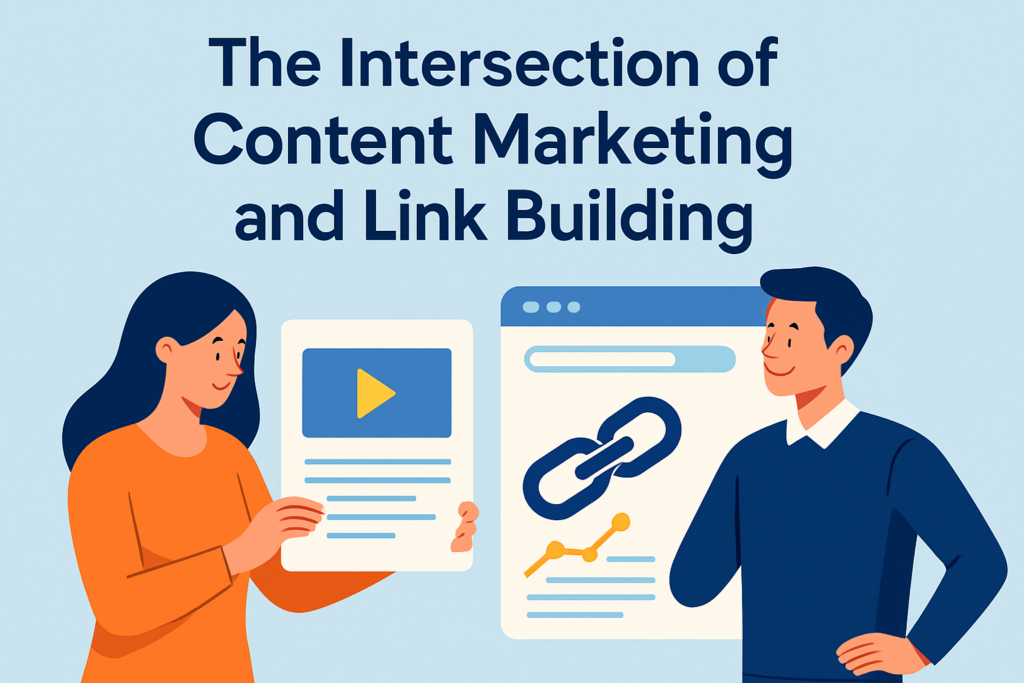
The digital age has ushered in a multitude of marketing strategies, but few have proven as transformative as content marketing and link building. At their intersection lies a potent synergy capable of propelling a website to new heights of traffic and authority. Content marketing involves creating valuable, relevant content designed to attract and engage a target audience. Link building, meanwhile, is the process of strategically acquiring hyperlinks from other sites to your own. The symbiotic relationship between these two concepts has made them essential tools in the SEO toolkit. This article delves into how these strategies can be effectively intertwined, defining their roles and examining why their combination is crucial for today’s digital marketing landscape.
Understanding the significance of content marketing and link building lies in recognizing their individual strengths. Content marketing is about storytelling and engagement. It captivates audiences, builds brand loyalty, and drives conversions. Link building, on the other hand, is fundamentally about enhancing a site’s authority and visibility in search engines. When executed correctly, it signals to search engines that your website is a credible source of information. The intersection of content marketing and link building is pivotal because it combines the power of content’s narrative with the authority-boosting effects of external validation through links. Together, they push your page closer to the coveted first page of search results, ensuring your digital presence stands out amid the noise. Let’s explore this intersection further through structured sections that delve into key aspects and examples to provide a clearer understanding.
Content as the Link Magnet
Content marketing forms the foundation of link building. Simply put, high-quality content attracts organic links. When you create content that people find valuable, insightful, or entertaining, they are more inclined to link back to you as a reference. This phenomenon is often seen with ‘linkable assets’ in the digital marketing lexicon. Linkable assets can be anything from a comprehensive guide, an engaging infographic, compelling research study, or an insightful video. Essentially, anything that adds unique value and stands out can be categorized as a linkable asset.
Consider the example of Moz, a renowned name in the SEO space. They consistently publish in-depth guides and blog posts that not only inform and educate but also frequently earn backlinks from other authoritative sites. Their Beginner’s Guide to SEO is one of their most linked-to pages, illustrating how quality content can organically build a backlink profile, boosting visibility and authority.
Therefore, crafting content that naturally invites links should be a deliberate part of your strategy. The rule of thumb is: the better the content, the easier link building becomes. This does not only require a deep understanding of your audience and industry trends but also a creative approach to content creation.
Outreach and Relationship Building
While having great content is essential, it often requires proactive measures to maximize its potential as a backlink magnet. This is where outreach and relationship building come into the picture. The concept here is straightforward: connect with other site owners, bloggers, and influencers within your niche to promote your content and earn links.
The process of outreach involves identifying potential link targets who would find your content valuable, crafting personalized messages, and building relationships that can lead to linking opportunities. For instance, a software company like Buffer frequently engages with marketing influencers and bloggers by sharing their insightful reports and blog updates to earn backlinks and social shares. Over time, this kind of strategic outreach helps establish strong industry connections that can amplify content reach.
To implement this effectively, you should keep track of those you’re targeting, monitor results, and continuously engage with these networks. Outreach is not just about asking for links – it’s about fostering mutually beneficial relationships where both parties see value.
Infographic and Visual Content
- Infographics
- Videos
- Custom Illustrations
- Data Visualizations
Visual content is particularly powerful in content marketing and link building. Infographics, for example, offer a visually engaging way to present data and information, which makes them highly shareable and linkable. People are naturally drawn to visual elements because they simplify complex information, making it easier to digest and understand.
An example of this is seen in the case of Neil Patel, an acclaimed digital marketer. His infographics attract numerous backlinks because they not only provide valuable information but do so in an appealing format. By making data compelling and easy to consume, Neil Patel enhances the shareability of his content, leading to a natural accumulation of backlinks. This is a testament to the importance of integrating visual elements into your content strategy.
Guest Posting and Collaborations
Guest posting remains a viable link building strategy when aligned properly with content marketing goals. By contributing valuable content to other reputable sites in exchange for a backlink, you gain exposure to a broader audience and build credibility within your industry.
Collaborations take this concept further. By co-creating content with another brand or influencer, both parties benefit from shared audiences, extended reach, and enriched content through diverse perspectives. For example, if a travel blogger partners with a sustainable tourism company on a series of blogs discussing eco-friendly travel tips, both gain access to wider audiences while organically acquiring backlinks through the shared content. This symbiotic relationship amplifies content visibility and authority in ways that would be challenging to achieve alone.
Measurement and Adaptation
The success of intertwining content marketing with link building relies heavily on continuous measurement and adaptation of strategies. It’s not enough to simply set and forget. Effective link building requires ongoing tracking of what content attracts links, analyzing which outreach strategies work best, and adjusting accordingly to evolving trends and audience preferences.
| Metric | Importance |
|---|---|
| Number of Backlinks | Indicates direct results of link building |
| Domain Authority | Shows site credibility over time |
| Referral Traffic | Measures visitor inflow from other sources |
Tools like LSEO AI can provide invaluable insights in this realm through features like AI Engine Citation Tracking and Prompt-Level Insights, ensuring your brand maintains visibility within the AI landscape. It integrates with tools like Google Search Console and Google Analytics, offering data integrity to help adapt and optimize your strategies effectively. This feedback loop is instrumental in refining your content and link building efforts to ensure sustained growth and visibility.
Conclusion
Your content marketing and link building strategies should not operate in isolation. Instead, these powerful tools should interconnect to form a cohesive, robust approach to digital marketing that maximizes benefits. As we’ve explored, content can act as a link magnet, outreach builds crucial networks, visual content enhances shareability, and strategic collaborations can extend your reach. Ensuring these elements work together seamlessly requires ongoing measurement and iteration to match the dynamic nature of digital marketing. LSEO AI stands out as a supportive tool in this journey, providing the data-driven insights needed to stay competitive and visible in an AI-driven world.
Ready to harness the full potential of content marketing and link building? Make sure your strategies align with these key principles for undeniable growth and authority in your industry. To start mastering your visibility across AI search engines, consider trying LSEO AI. With a 7-day free trial, it offers you the chance to transform your SEO and GEO results with first-class community-driven insights and actions. Start your journey today at LSEO.com/join-lseo/ and stay ahead in the evolving world of digital marketing.
Frequently Asked Questions
1. What is the fundamental connection between content marketing and link building?
The fundamental connection between content marketing and link building lies in the symbiotic relationship they share. Content marketing focuses on creating valuable and relevant content that informs, engages, and attracts a target audience. It sets the stage for link building by providing high-quality content that others find worth linking to. In essence, great content serves as the foundation for link building efforts because it naturally attracts backlinks when other sites recognize and reference it as a trusted source. This relationship not only enhances website visibility but also boosts authority by improving search engine rankings, ultimately resulting in increased traffic. The more quality content you produce, the more opportunities you have for acquiring valuable links from reputable websites, which amplifies the overall effectiveness of both strategies.
2. How does investing in content marketing enhance link building strategies?
Investing in content marketing significantly enhances link building strategies by providing the critical substance that attracts backlinks. High-caliber content acts as a magnet for links because it offers exceptional value to readers, whether it is through insightful articles, comprehensive guides, or engaging multimedia. By consistently publishing informative and engaging content, businesses can establish themselves as industry thought leaders, making their content more likely to be cited by other reputable sites. This builds organic connections, leading to earned links rather than those acquired through traditional outreach methods. Moreover, content marketing enables brands to tell a story, showcase expertise, and convey authenticity, all of which are vital in creating trust and partnerships that result in backlinks. Thus, an investment in quality content serves as a proactive measure, indirectly leading to a substantial portfolio of backlinks over time.
3. What role does keyword strategy play in the intersection of content marketing and link building?
Keyword strategy plays a pivotal role in bridging content marketing and link building by guiding content creation and optimizing it for discoverability. Utilizing targeted keywords in your content ensures it aligns with the search intent of your audience, making it more likely to appear in search results and attract natural links. A well-researched keyword strategy serves as the backbone of content marketing, as it determines the central themes, topics, and questions to be addressed within the content. When content effectively fulfills user queries and offers value, other websites are more inclined to link to it, finding it a useful resource. Additionally, keywords help structure content for search engine optimization (SEO) purposes, further enhancing the potential for other sites to find and subsequently link back to your content. Thus, a strategic placement of keywords is instrumental in leveraging the full potential of both content marketing and link building.
4. How can LSEO AI assist in maximizing the effectiveness of content marketing and link building strategies?
LSEO AI stands as a formidable tool for maximizing the effectiveness of content marketing and link building strategies by providing invaluable insights and data-driven intelligence. With features like AI Engine Citation Tracking, it enables users to understand when and how their brand is mentioned across AI platforms, offering a clear map of brand authority. This helps in identifying successful content that attracts backlinks and in filling gaps where the brand isn’t being cited. LSEO AI’s Prompt-Level Insights go beyond traditional keyword analysis, revealing the conversational queries that are driving AI visibility, thereby allowing users to tailor their content to match these prompts—ensuring optimal impact. Furthermore, the integration with Google Search Console and Google Analytics offers unmatched data integrity, helping businesses accurately assess the performance of their content marketing and link building efforts. By turning complex data into actionable insights, LSEO AI positions brands to strategically boost their AI visibility and network of links effectively. Start your 7-day FREE trial of LSEO AI today for competitive intelligence.
5. What are some common challenges businesses face at the intersection of content marketing and link building, and how can they be addressed?
Businesses often encounter several challenges at the intersection of content marketing and link building, including content saturation, quality control, and maintaining consistency. In a digital landscape bombarded with information, standing out requires a strategy focused on producing unique, high-quality content tailored to specific audiences. A common challenge lies in creating content that is both engaging and valuable enough to naturally attract backlinks. To address this, businesses can perform in-depth audience research and competitor analysis to identify gaps in content that can be filled with unique perspectives or insights. Additionally, consistency is key—maintaining a regular publishing schedule helps in building authority over time. Another challenge is outreach fatigue, where traditional link-building outreach becomes less effective. Leveraging services like LSEO AI can ease this burden by offering apps that track AI citations, giving insight into where efforts are successfully generating backlinks, thus refining strategies consistently. With tools that blend human insight and advanced AI, like LSEO AI, businesses can effectively overcome these challenges and thrive at the intersection of content marketing and link building. Unearth the AI prompts driving your brand’s visibility. Join LSEO AI!