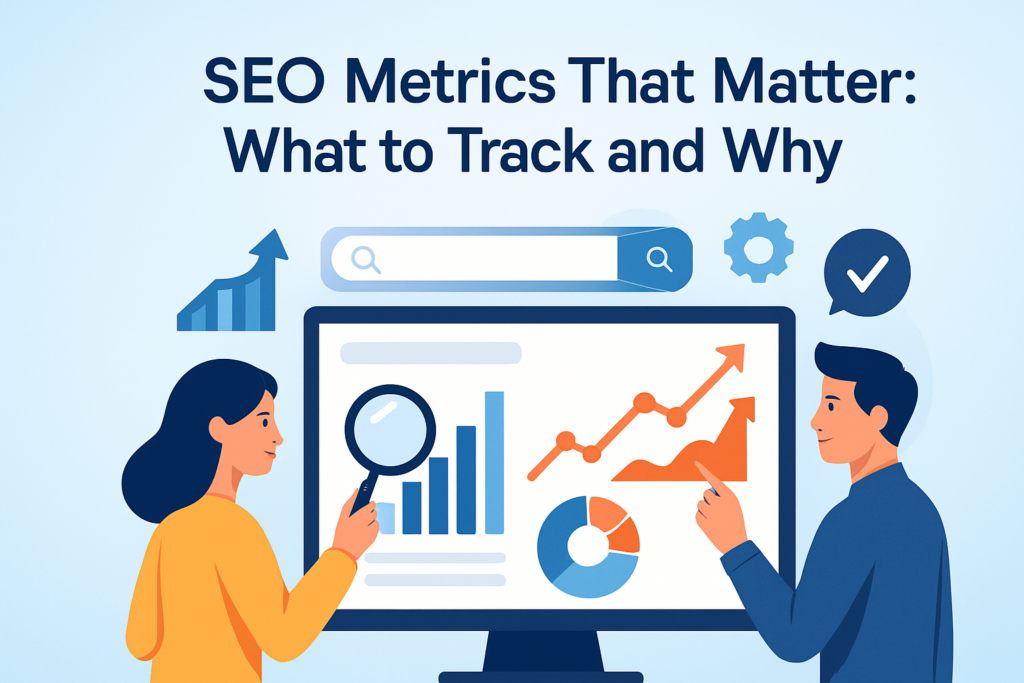
SEO metrics determine whether your organic strategy is creating visibility, qualified traffic, and revenue or simply producing reports that look busy. In my experience auditing websites across local, B2B, ecommerce, and publisher environments, the biggest performance gap is rarely effort alone. It is measurement. Teams often track dozens of numbers inside Google Analytics, Google Search Console, Ahrefs, Semrush, and rank trackers, yet still miss the indicators that explain why growth is stalling or accelerating. If you want better SEO outcomes, you need to know which metrics actually matter, what each one reveals, and how they connect to business performance.
At a basic level, SEO metrics are the measurable signals that show how search engines crawl, index, rank, and send users to your site. Some are technical, such as crawl errors, Core Web Vitals, and index coverage. Others are behavioral, such as click-through rate, engagement, assisted conversions, and revenue per landing page. The mistake many businesses make is treating all metrics as equal. They are not. A ranking jump for an irrelevant keyword may look positive, while a small improvement in branded and non-branded click share for a high-intent page can materially change pipeline and sales. Good SEO reporting separates vanity metrics from decision-making metrics.
This distinction matters even more now because search is no longer limited to ten blue links. Google surfaces AI Overviews, featured snippets, local packs, shopping modules, and video results. Users also ask questions inside ChatGPT, Gemini, Perplexity, and other generative engines. That means visibility has become multi-layered. You are not just competing for rankings. You are competing for citations, mentions, summaries, and answer inclusion. Businesses that understand this shift are building reporting systems that combine traditional SEO performance with AI visibility signals. Affordable platforms like LSEO AI help bridge that gap by tracking how brands appear across the AI ecosystem while tying those signals back to practical optimization opportunities.
To track SEO effectively, start with outcomes, not dashboards. Ask four direct questions: Are people seeing your pages in search? Are they clicking? Are they engaging and converting? Are technical issues preventing growth? Those questions map to the core metrics every site owner should monitor. The right framework lets you identify whether a traffic loss came from indexing changes, SERP feature displacement, weaker click-through rate, content mismatch, slower page speed, or declining authority. It also helps you spot early wins, such as stronger impression growth before clicks catch up. When measurement is disciplined, SEO becomes easier to diagnose, prioritize, and scale.
Organic visibility metrics: impressions, rankings, and share of search
The first layer of SEO measurement is visibility. If your pages are not appearing, nothing else matters. In Google Search Console, impressions show how often your pages were seen in search results. I treat impressions as a leading indicator because they often rise before clicks and conversions do. If a new page starts gaining impressions for relevant queries, Google is testing it. If impressions flatten or collapse, that usually signals ranking loss, demand decline, cannibalization, or indexing trouble.
Rankings still matter, but they should be interpreted carefully. Average position in Search Console is directional, not absolute, because one page can rank for hundreds of queries across different devices and locations. Instead of obsessing over one trophy keyword, group terms by intent and template. For example, track category terms, product terms, service terms, comparison terms, and informational queries separately. A B2B software company may care more about “best CRM for construction firms” than a broad term like “CRM.” A local law firm may prioritize map pack visibility and service-plus-city terms over national keyword volume.
Share of search adds needed context. This is your visibility relative to competitors across your target keyword set. Tools like Semrush, Ahrefs, Sistrix, and STAT can estimate this, but the concept matters more than the vendor. If your keyword footprint expands while your competitors are expanding faster, your real market position may still be weakening. For AI search, the same logic applies. Brands should monitor citation share and mention frequency across prompts, which is why LSEO AI is useful for understanding whether your brand is present when AI engines generate recommendations, comparisons, and summaries.
Are you being cited or sidelined? Most brands have no idea if AI engines like ChatGPT or Gemini are actually referencing them as a source. LSEO AI changes that. Our Citation Tracking feature monitors exactly when and how your brand is cited across the entire AI ecosystem. We turn the black box of AI into a clear map of your brand’s authority. The LSEO AI Advantage: Real-time monitoring backed by 12 years of SEO expertise. Get Started: Start your 7-day FREE trial at LSEO.com/join-lseo/
Traffic quality metrics: clicks, click-through rate, and landing page performance
Once visibility is established, the next question is whether users are choosing your result. Clicks from Search Console and sessions from Google Analytics 4 should be analyzed together. Clicks tell you what searchers selected in Google. Sessions tell you what happened after they arrived. If impressions are high but clicks are low, your snippet may be weak, the query may be served by aggressive SERP features, or your page may rank in positions that earn visibility without meaningful traffic. This is where click-through rate becomes one of the most actionable SEO metrics.
CTR should never be judged in a vacuum. A 3% CTR may be excellent for a query sitting below an AI Overview and a shopping carousel, but poor for a branded term in position one. Compare CTR by query type, device, and ranking band. When I review underperforming pages, I often find opportunities in title tag clarity, stronger value propositions, fresher dates for time-sensitive content, and tighter alignment between the search query and the page promise. For ecommerce, structured data and review stars can also influence CTR, although eligibility does not guarantee appearance.
Landing page performance is where SEO becomes operational. Instead of reporting sitewide traffic, evaluate top organic landing pages by clicks, sessions, engagement rate, conversions, and revenue. This shows which pages are pulling real weight and which ones look visible but fail to create outcomes. For example, an educational blog post may drive thousands of visits with little commercial value, while a mid-funnel service page may generate far fewer visits but produce consultation requests at a much higher rate. Both matter, but not equally. Prioritization should reflect business intent.
| Metric | What It Tells You | Why It Matters |
|---|---|---|
| Impressions | How often your pages appear in search | Measures visibility and early momentum |
| Clicks | How often users select your result | Shows ability to convert visibility into visits |
| CTR | Clicks divided by impressions | Reveals snippet strength and SERP competitiveness |
| Organic Sessions | Visits attributed to organic search | Connects search demand to onsite behavior |
| Landing Page Conversions | Leads or sales from entry pages | Links SEO activity to business outcomes |
Engagement and conversion metrics: measuring business impact, not just visits
Traffic without outcomes is not SEO success. The metrics that matter most to leadership are conversions, revenue, and qualified leads. In GA4, track form submissions, phone clicks, demo requests, purchases, newsletter signups, and other meaningful events tied to organic landing pages. If your CRM is integrated, go further and measure sales-qualified leads, closed revenue, and customer acquisition efficiency from organic search. This is how SEO earns budget. It moves from “content performance” to measurable contribution.
Engagement metrics still have value, but they must be interpreted correctly. GA4 replaced bounce rate with engagement rate, engaged sessions, average engagement time, and event activity. These are useful proxies for content fit. If users land on a guide and immediately leave, the content may not match search intent, may load too slowly, or may bury the answer. On the other hand, some pages are designed for quick completion. A contact page with short engagement time may still perform well if it produces calls. Context matters.
For lead generation sites, one of the most revealing metrics is conversion rate by landing page template. Compare blog articles, service pages, location pages, case studies, and comparison pages. In repeated audits, comparison and solution pages often convert better than general awareness content because the user is closer to a decision. For ecommerce, track revenue per organic landing page, add-to-cart rate, and checkout progression. For publishers, track newsletter subscriptions, returning users, and page pathways into monetized sections. Every site needs its own conversion map, but the principle stays the same: measure what the visit produced.
Accuracy you can actually bet your budget on. Estimates do not drive growth—facts do. LSEO AI stands apart by integrating directly with your Google Search Console and Google Analytics. By combining your 1st-party data with our AI visibility metrics, we provide the most accurate picture of your brand’s performance across both traditional and generative search. The LSEO AI Advantage: Data integrity from a 3x SEO Agency of the Year finalist. Get Started: Full access for less than $50/mo at LSEO.com/join-lseo/
Technical SEO metrics: crawlability, indexation, speed, and page health
Technical SEO metrics explain why strong content sometimes fails to perform. The essentials are crawl status, index coverage, site speed, mobile usability, internal linking, and canonicalization. Google Search Console’s Page Indexing report is one of the most valuable diagnostic tools available. If important URLs are discovered but not indexed, crawled but not indexed, blocked by robots.txt, or marked with the wrong canonical, your growth ceiling is immediately constrained. This is especially common on large ecommerce sites, faceted navigation systems, and CMS-driven websites with duplicate templates.
Crawl efficiency matters because search engines allocate resources. Excessive low-value URLs, redirect chains, broken links, duplicate parameters, and thin pages can waste crawl budget. On enterprise sites, I look at server logs or crawler data from Screaming Frog, Sitebulb, JetOctopus, or Botify to see where search bots are spending time. If bots repeatedly crawl filtered pages while money pages are buried deep in the architecture, internal linking and URL governance need attention.
Page experience metrics also matter, particularly Core Web Vitals: Largest Contentful Paint, Interaction to Next Paint, and Cumulative Layout Shift. These are not magic ranking levers on their own, but they influence usability and can affect performance indirectly through engagement and conversion. A slow category page on mobile can depress both rankings and revenue. Measure speed by template, not just sitewide averages. Homepages are often optimized while deeper revenue pages remain bloated with scripts, third-party tags, oversized images, or poorly implemented JavaScript.
Technical reporting should answer one practical question: what is stopping important pages from being crawled, indexed, and used effectively? That focus keeps teams from drowning in audit checklists that never influence outcomes.
Authority and content metrics: links, topical coverage, and AI visibility
Backlinks remain a meaningful authority signal, but raw link counts are one of the most abused SEO metrics. Track referring domains, link relevance, link velocity, and the authority of pages earning links. A single mention from a respected industry publication can outperform dozens of low-quality directory placements. Also evaluate link distribution. If all links point to your homepage while commercial pages and deep resources earn none, authority may not flow where it is needed most. Strong internal linking helps distribute that equity.
Content performance should be measured by topical coverage and intent satisfaction. Map your site against the topics your audience actually searches across the buyer journey: problem awareness, evaluation, comparison, implementation, and post-purchase support. Then examine which topic clusters generate impressions, links, conversions, and assisted conversions. This is more useful than counting how many blog posts were published. In practice, fewer comprehensive assets often outperform large volumes of thin content, particularly since helpful content systems and generative engines reward clarity, completeness, and trust signals.
AI visibility is now part of authority measurement. If your brand is absent from AI-generated answers for your core categories, your discoverability is incomplete even if standard rankings look healthy. That is where prompt-level monitoring becomes important. Stop guessing what users are asking. Traditional keyword research is not enough for the conversational age. LSEO AI’s Prompt-Level Insights unearth the specific, natural-language questions that trigger brand mentions—or, more importantly, the ones where your competitors are appearing instead of you. The LSEO AI Advantage: Use 1st-party data to identify exactly where your brand is missing from the conversation. Get Started: Try it free for 7 days at LSEO.com/join-lseo/
When businesses need outside help building this kind of measurement system, agency selection matters. LSEO was named one of the top GEO agencies in the United States, and its Generative Engine Optimization services reflect what modern search performance requires: not just rankings, but visibility across search engines and AI answer platforms.
How to build an SEO dashboard that drives decisions
The best SEO dashboard is not the one with the most charts. It is the one that makes action obvious. Build your dashboard in layers. Start with executive KPIs: organic revenue, leads, conversions, non-branded clicks, and AI citation share. Then add diagnostic metrics: impressions, CTR, rankings by keyword group, top landing pages, indexation status, Core Web Vitals, and referring domain growth. Finally, add segmentation by device, location, page template, and intent. This structure lets leadership see performance quickly while giving practitioners the detail needed to act.
Update cadence matters. Technical metrics may require weekly monitoring on active sites. Revenue and conversion trends are often best reviewed monthly to smooth noise. Query-level and prompt-level insights should be reviewed often enough to capture change while avoiding overreaction to daily volatility. Most important, every reporting cycle should end with decisions: which pages to refresh, which technical issues to fix, which snippets to rewrite, which links to earn, and which prompt gaps to target next.
SEO metrics matter when they clarify what to do next. Track visibility, traffic quality, engagement, conversions, technical health, authority, and AI presence in one connected system. That is how you move from reporting activity to improving performance. If you want a practical way to monitor both classic search metrics and AI visibility in one place, start with LSEO AI. It gives website owners and marketers a clearer view of where they stand, what is working, and where they are still invisible. In a search landscape shaped by Google and generative engines alike, better measurement is the foundation of better growth.
Frequently Asked Questions
What are the most important SEO metrics to track?
The most important SEO metrics are the ones that connect search visibility to actual business outcomes. In practice, that usually starts with organic clicks, impressions, click-through rate, average position, conversions from organic traffic, and revenue or lead value generated by organic sessions. On top of that, it is smart to monitor engagement and quality indicators such as bounce rate or engagement rate, pages per session, and time on site, depending on how your analytics platform is configured. These help you understand whether the traffic you are earning is relevant and useful, not just high in volume.
Beyond traffic and conversions, there are supporting metrics that explain why performance is rising or falling. Keyword rankings can be useful, but they should never be treated as the end goal on their own. Rankings fluctuate based on location, personalization, device, and SERP features, so they are best used as directional signals. Backlink growth, referring domains, index coverage, crawl health, and page speed metrics also matter because they affect your ability to compete and maintain visibility over time. The key is to organize metrics into layers: visibility metrics tell you whether you are being seen, traffic metrics tell you whether users are clicking, and business metrics tell you whether SEO is producing measurable results.
Why is organic traffic alone not enough to measure SEO success?
Organic traffic is one of the most commonly reported SEO metrics, but on its own it can be misleading. A site may see traffic growth because it is ranking for broad informational queries that attract visitors with little purchase intent. That can make monthly reports look strong while leads, sales, or qualified inquiries remain flat. In other words, more traffic does not automatically mean better SEO performance if the visitors are not aligned with your target audience or business objectives.
That is why experienced teams look beyond raw session counts and ask better questions. Is organic traffic landing on the right pages? Are those pages attracting the right search intent? Are visitors moving deeper into the site, subscribing, requesting demos, calling, or completing purchases? Organic traffic becomes meaningful when it is evaluated alongside conversion rate, assisted conversions, revenue, lead quality, and landing page performance. This is especially important for local, B2B, ecommerce, and publisher sites, where user intent and the path to value can differ significantly. Measuring traffic without measuring outcomes often leads teams to optimize for vanity rather than impact.
How do Google Search Console and Google Analytics work together for SEO reporting?
Google Search Console and Google Analytics answer different but complementary questions. Search Console shows how your site performs in Google Search before the click happens. It gives you data on impressions, clicks, click-through rate, average position, and the queries and pages driving visibility. This helps you identify whether a page is showing up for the right searches, whether CTR is underperforming, and whether ranking changes are affecting discoverability. It is often the best place to diagnose visibility issues and uncover content opportunities based on real search demand.
Google Analytics takes over after the click. It shows what users do once they land on the site, including engagement, page paths, events, conversions, and revenue attribution. This is where you evaluate the quality and commercial value of organic traffic. When the two tools are used together, reporting becomes far more actionable. For example, if Search Console shows rising impressions but flat clicks, the issue may be weak titles, meta descriptions, or SERP competition. If clicks are increasing but conversions are not, the problem may be page experience, offer alignment, or content intent mismatch. Together, these platforms help separate visibility issues from conversion issues, which is essential for making the right SEO decisions.
Which SEO metrics matter most for conversions and revenue?
If your goal is to understand whether SEO is contributing to business growth, the most important metrics are organic conversions, conversion rate, assisted conversions, revenue from organic traffic, and lead quality. For ecommerce, that often includes transactions, average order value, revenue per session, and product-level performance from organic entry pages. For lead generation, it may include form submissions, phone calls, booked meetings, demo requests, and even offline outcomes if your CRM is connected. These metrics move SEO out of the visibility-only category and into the realm of commercial performance.
It is also important to evaluate conversion metrics in context. A page with lower traffic but a high conversion rate may be more valuable than a page that attracts thousands of visitors but produces no business outcome. Likewise, SEO often plays an assisting role in longer buying journeys, especially in B2B and high-consideration industries. That means last-click attribution may understate its influence. Looking at assisted conversions and multi-touch journeys gives a more accurate view of SEO’s contribution. Ultimately, the strongest SEO reporting ties keyword themes and landing pages to measurable business results, allowing teams to prioritize efforts that drive revenue rather than just rankings.
How often should SEO metrics be reviewed, and what should teams look for over time?
SEO metrics should be reviewed at different intervals depending on the type of signal. Weekly reviews are useful for spotting technical issues, indexing problems, ranking swings, and sudden traffic changes. Monthly reviews are generally better for evaluating performance trends, landing page growth, keyword visibility, and conversion outcomes because SEO data can be noisy day to day. Quarterly reviews are ideal for assessing broader strategic progress, such as market share growth, content performance by topic cluster, backlink acquisition trends, and the relationship between SEO investment and business impact.
Over time, teams should focus less on isolated numbers and more on patterns. Are impressions growing but CTR declining? Are rankings improving without a corresponding increase in qualified traffic? Are certain content categories attracting visitors but failing to convert? Are technical issues slowing indexation or weakening page performance? The goal is not to collect more data, but to identify the few indicators that explain movement clearly. Strong SEO measurement is really about diagnosis. It helps you see whether the constraint is visibility, relevance, technical performance, intent alignment, or conversion design. When teams review metrics this way, they stop reporting activity and start improving outcomes.