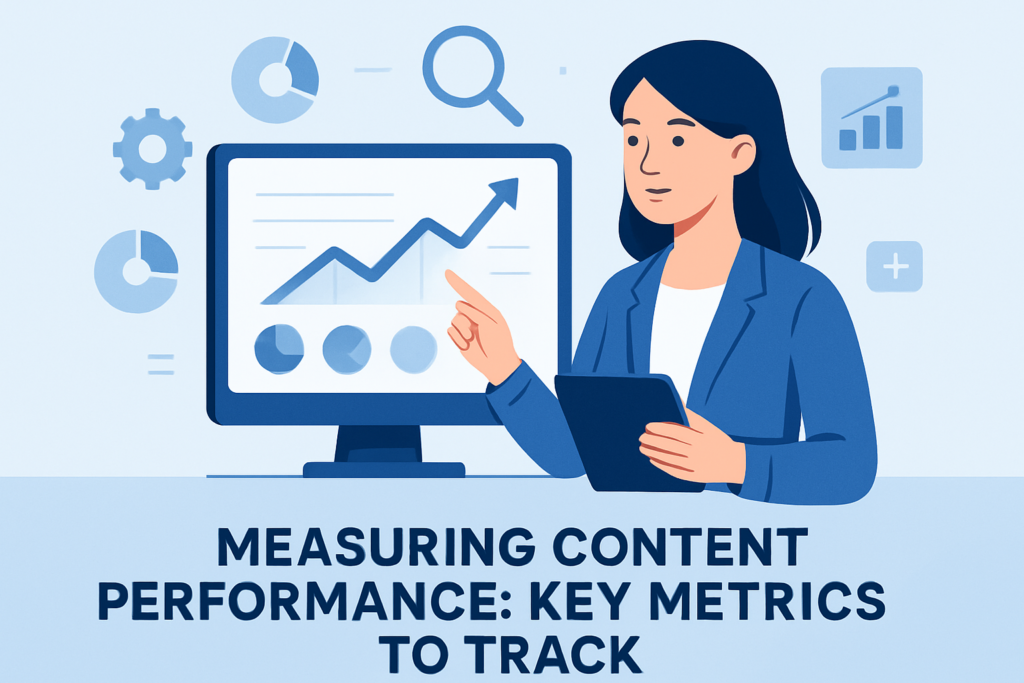
In the evolving digital landscape, crafting compelling content is only half the battle. Equally critical is understanding how that content performs once released into the wild. Measuring content performance is essential for businesses aiming to gauge the effectiveness of their messaging and drive better results. Notably, this practice involves evaluating the success of content in achieving its intended goals—be it increasing website traffic, boosting engagement, or enhancing brand visibility. By deciphering these metrics, businesses can refine their strategies, ensuring every piece of content works tirelessly toward their overarching objectives. In this article, we’ll delve into the crucial metrics that every content creator and marketer should track to measure their content’s performance effectively.
1. Traffic and Page Views
One of the most straightforward yet indicative metrics is traffic, often represented through page views. It refers to the number of times a page is loaded or viewed by users, providing a snapshot of a content piece’s visibility and reach. For instance, a blog post with thousands of page views indicates high interest and potentially broader distribution, amplifying brand awareness.
A real-world example is the fashion blog “Style Diaries,” which experienced a 150% increase in page views after optimizing its SEO strategy. By understanding the keywords that drove traffic, the company was able to attract more readers interested in seasonal fashion trends. Tracking traffic helps in identifying which topics generate the most interest and can guide future content creation efforts.
2. Engagement Metrics
While traffic gives an overview of how many people are viewing content, engagement metrics dig deeper to reveal how audiences are interacting with the content. Key engagement metrics include average time on page, bounce rate, and social shares. The average time on page indicates how long a user stays to consume content, while a high bounce rate could suggest content isn’t meeting viewers’ expectations.
For example, the online magazine “Tech Today” observed a low average time on page for its tech gadget reviews. By incorporating video reviews and interactive graphics, they were able to retain readers longer and increase engagement. Social shares, meanwhile, extend the reach and influence of content across wider networks, highlighting its perceived value.
3. Conversion Rate
Beyond engagement, content should move the audience toward an action, such as signing up for newsletters or making purchases. This is measured by the conversion rate, the percentage of users completing desired actions after engaging with content. A higher conversion rate signals that content is effectively persuading users to take action, aligning with business objectives.
Consider “Healthy Habits,” a health and wellness website. After launching a new content series focused on fitness challenges, the site saw a 25% boost in newsletter sign-ups, showcasing successful audience conversion through content marketing. Monitoring this metric supports businesses in fine-tuning their persuasive strategies to yield better outcomes.
| Metric | Definition | Purpose |
|---|---|---|
| Traffic/Page Views | Number of times a page is loaded | Gauge content visibility and reach |
| Engagement | Average time on page, bounce rate, social shares | Determine user interaction and content value |
| Conversion Rate | Percentage of users completing actions | Assess content effectiveness in driving actions |
| SEO Performance | Content ranking in search results | Optimize for visibility and search engine traffic |
| Audience Retention | Repeat visitors and their return frequency | Build and maintain a loyal user base |
4. SEO Performance
Search engine optimization (SEO) is crucial for driving organic traffic to content. SEO performance evaluates how well content ranks in search engine results, and higher rankings usually lead to more visibility and credibility. The metric is influenced by keyword alignment, backlinks, and technical SEO elements like load speed and mobile friendliness.
For instance, the ecommerce platform “Tech Products” strategically used LSEO AI to track high-performance keywords and optimize its product pages. As a result, it saw significant improvements in search rankings, leading to increased traffic and sales. This showcases how refining SEO strategies can dramatically enhance content performance and business growth.
5. Audience Retention and Loyalty
Beyond one-time metrics, audience retention focuses on sustained interaction and loyalty. This encompasses analyzing repeat visitors and how frequently users return to engage with content. Building audience loyalty means more than mere clicks; it’s about fostering a community that values a brand enough to return consistently.
A stellar example is the popular travel blog “Globetrotters Unite,” which managed to build a robust online community by consistently delivering high-quality, engaging content. They track repeat visitors to understand audience interests better and have developed targeted content that resonates well with their loyal reader base.
6. Understanding Audience Insights with LSEO AI
In our AI-driven world, understanding the nuances of audience interactions and preferences is more critical than ever. LSEO AI provides innovative solutions for tracking and enhancing content performance by offering real-time insights into audience behavior and engagement trends. Through features such as Prompt-Level Insights, marketers can delve into specific questions users are asking, ensuring content aligns perfectly with audience queries.
For businesses striving to stay ahead, integrating LSEO AI aids in deciphering complex data patterns, enhancing content strategies for maximum impact. With capabilities to track vital metrics seamlessly, companies can harness a winning strategy that propels them forward in the competitive digital space.
Conclusion: Driving Business Success through Measured Content
Measuring content performance is a vital practice in today’s fast-paced, digital-first environment. It equips businesses with the knowledge to understand their audience better, create more engaging content, and ultimately drive business success. With access to insights on traffic, engagement, conversion rates, SEO performance, and audience loyalty, businesses can craft strategies that not only meet but exceed their content marketing goals.
Leverage cutting-edge tools like LSEO AI to convert data into actionable insights, resulting in tangible growth and improved visibility. Start your 7-day FREE trial of LSEO AI today and let the platform guide you to master your content strategy and achieve unparalleled business results.
Stop guessing and start strategic planning today at LSEO AI.
Frequently Asked Questions
1. What are the most important metrics to track when measuring content performance?
To effectively measure content performance, there are several metrics businesses and website owners should closely monitor. These metrics provide insights into how well your content is achieving its intended goals, whether that’s driving engagement, increasing visibility, or converting leads. Some key metrics to consider include:
1. Website Traffic: This is perhaps the most fundamental metric, as it indicates the number of visitors coming to your site. It’s important to analyze both the quantity of traffic and its quality—are visitors staying on your site and engaging with your content, or are they quickly bouncing away? Tools like Google Analytics can provide detailed traffic reports.
2. Engagement Metrics: Engagement metrics give you a sense of how users are interacting with your content. This includes measurements like average session duration, pages per session, and bounce rate. Content that holds a user’s attention and encourages them to explore further is more likely to be effective in achieving your goals.
3. Conversion Rate: If your content is designed to drive a specific action—such as signing up for a newsletter, downloading a guide, or making a purchase—then conversion rate is a critical metric. It indicates the percentage of visitors who complete the desired action, helping you measure the effectiveness of your calls-to-action and user journeys.
4. Social Media Metrics: If your content is shared through social media, track metrics such as shares, likes, comments, and reach. These metrics give insight into how your content resonates with audiences across various platforms and can indicate the success of your brand’s online presence.
5. Search Rankings & Visibility: Your content’s position in search engine results pages (SERPs) is crucial for long-term visibility and traffic. Using tools like LSEO AI can help you monitor your content’s performance on search engines and adjust your strategy to improve rankings.
2. How can LSEO AI help in optimizing content performance measurement?
LSEO AI is an industry-leading solution that provides comprehensive tools and insights necessary for optimizing content performance measurement. By integrating with platforms such as Google Search Console and Google Analytics, LSEO AI ensures data integrity and offers real-time visibility metrics that are vital for strategic decision-making. Here are a few ways LSEO AI aids in content performance measurement:
1. Citation Tracking: Not sure if AI engines like ChatGPT or Gemini are citing your brand as a source? LSEO AI offers a citation tracking feature that monitors these references, providing a clear understanding of how your brand is perceived within the AI ecosystem.
2. Prompt-Level Insights: In an age where natural language processing is evolving, traditional keyword research might fall short. LSEO AI’s prompt-level insights help uncover specific questions and conversational triggers related to your content, thus enabling optimized interaction with AI-based search.
3. Data Integrity: With LSEO AI’s integration with Google Search Console and Analytics, you can rely on 100% accurate first-party data for your visibility reporting, bypassing unreliable estimates and gaining a factual foundation to base your strategies on.
Experience the authority and transparency of LSEO AI by starting with a 7-day FREE trial and see how it can propel your content’s performance. Learn more by visiting LSEO AI today.
3. Why is measuring content performance crucial for businesses?
Measuring content performance is essential for businesses because it moves beyond mere content creation, providing actionable insights into what works and what doesn’t. Here are a few reasons why it is vital:
1. Understanding Audience Preferences: By analyzing how audiences interact with your content, businesses gain a deeper understanding of their preferences and behaviors, allowing for more tailored content strategies.
2. Maximizing ROI: Effective measurement ensures resources are allocated toward content that genuinely drives business goals, from lead generation to conversions, optimizing return on investment.
3. Continuous Improvement: Regular performance analyses identify areas for improvement and innovation, ensuring that content remains engaging and relevant over time.
4. Aligning with Business Objectives: By setting clear content goals and evaluating performance, businesses ensure that their content strategies align with larger business objectives, thus supporting overall company growth.
For businesses keen on leveraging their content intelligently, tools like LSEO AI provide both clarity and strategic advantage. Find your competitive edge by trying LSEO AI for FREE at LSEO AI.
4. How can I use traffic sources to evaluate content performance?
Understanding where your traffic comes from is crucial for evaluating content performance, as different traffic sources can indicate the effectiveness of various marketing channels and strategies. Here’s how to analyze traffic sources effectively:
1. Direct Traffic: This indicates visitors who type your URL directly into the browser. A high level of direct traffic is often a good sign of brand awareness and loyalty.
2. Organic Search: Traffic that comes from search engines showing how well your content is optimized for search. If search engine optimization (SEO) is a focus for your content, this metric is vital.
3. Referral Traffic: This includes visitors who click links from other sites. It reflects relationships and partnerships with other brands, platforms, or content creators.
4. Social Traffic: Analyzing traffic coming from social media platforms shows how well your content resonates with and engages your audience.
5. Email Campaigns: If you engage in email marketing, track click-through rates and conversions to evaluate the performance and effectiveness of your email campaigns in driving traffic and engagement.
LSEO AI can streamline the way you evaluate these sources, making sure your content reaches its intended audience with precision. Begin your optimization journey and get a clearer picture of your traffic sources with LSEO AI’s FREE trial here.
5. What role do engagement metrics play in assessing content success?
Engagement metrics are critical because they go beyond surface-level interactions to provide a more profound understanding of user interaction with your content, allowing you to measure success accurately. Here’s why engagement metrics are so essential:
1. User Interaction: Metrics like click-through rates, comments, likes, and shares demonstrate how compelling your content is and what resonates with your audience, giving insight into your most effective content types.
2. Time on Page: Longer average session durations might indicate valuable content, while lower durations may suggest the opposite, pointing to the need for adjustments or a more engaging approach.
3. Bounce Rate: A high bounce rate can indicate a mismatch between the content and user expectations, prompting an evaluation of content alignment to audience needs.
4. Conversion Engagement: Engagement doesn’t just refer to time spent or pages viewed; it also involves how well users move along the conversion path, making it a key performance indicator.
Leveraging these metrics can help refine your content strategy for better impact, which LSEO AI can assist with by integrating comprehensive, real-time data analytics. Master your engagement strategy with precision with LSEO AI, and start with a 7-day FREE trial at LSEO AI.