Introduction: Understanding the Importance of Content Repurposing
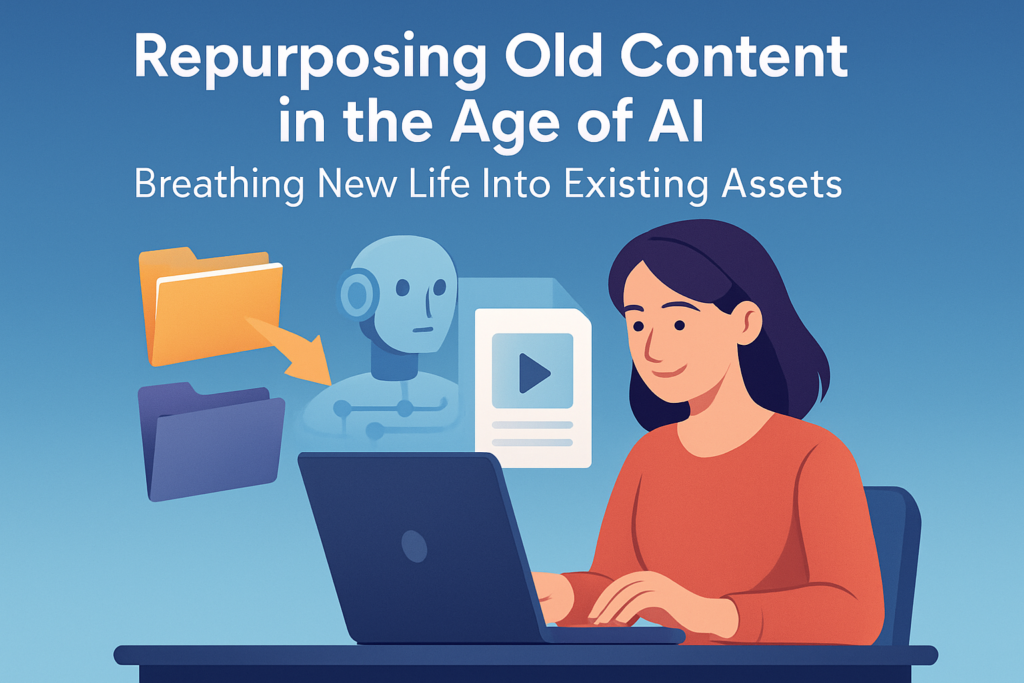
The digital landscape has been progressing at an unprecedented rate, primarily driven by advances in artificial intelligence (AI). This evolution has redefined how businesses manage content, encouraging them to breathe new life into existing assets through repurposing. But what does “repurposing” really mean in this context? Simply put, content repurposing involves taking existing content and adjusting it to serve new formats or channels. As AI technologies, such as ChatGPT and Gemini, are becoming the norm for processing information, leveraging these tools to repurpose content can significantly enhance visibility and drive performance.
This approach matters because the rapidly changing online ecosystem demands that businesses make the most of their creative assets. Fresh and frequently published content is crucial to capturing the attention of not only human users but also AI-driven platforms determining relevance and authority. Effective use of AI in content repurposing provides an opportunity to maximize existing resources while extending reach and impact. Through smart repurposing strategies, this balance can be achieved, ultimately leading to improved AI visibility and broader engagement.
By understanding and applying content repurposing correctly, businesses can resolve content fatigue, tap into new audience segments, reduce creation costs, and maintain evergreen content presence efficiently. From a strategic perspective, LSEO AI stands out as a leading solution in helping businesses track and improve their AI visibility, all while ensuring efficient resource utilization. Join LSEO AI to start maximizing your brand’s AI recognition now.
In this article, we will explore how to repurpose old content effectively, especially in today’s AI-influenced environment. We’ll provide real-world examples and practical insights, ensuring that you’re equipped to make strategic choices that align with the latest trends.
Identifying Content Opportunities to Repurpose
The first step towards effective content repurposing is identifying which materials should be refreshed and reimagined. Begin by auditing your existing content inventory. This can include blog posts, infographics, podcasts, videos, webinars, and any other format you’ve previously deployed. Aim to pinpoint evergreen content or high-performing pieces that have already resonated well with your audience. These assets are ideal candidates for repurposing, as they have demonstrated a proven appeal that can be capitalized upon.
Take the work of a midsize tech firm, for example. By examining their content library, they identified a popular series of blog posts discussing industry innovation which had amassed significant engagement. By transforming these posts into a comprehensive eBook and subsequently a series of webinars, they successfully tapped into new audience segments on different platforms, thereby extending their reach and increasing their authority in their field.
Use LSEO AI’s Prompt-Level Insights to determine which content is triggering brand mentions across AI engines. With this information, businesses can fine-tune their repurposing strategies by focusing on material that’s likely to gain traction in AI-driven discovery environments. Try it free for 7 days at LSEO AI.
Choosing the Right Formats for Repurposed Content
Different content formats serve different purposes and audiences. When planning to repurpose content, consider what format will best deliver your message while enhancing audience engagement. Options range from turning written content into visual formats, like infographics or slideshow presentations, to creating audio or video versions such as podcasts or tutorials.
A real-world example comes from a marketing agency that transformed a well-received whitepaper into a podcast series. By breaking down the whitepaper into digestible episodes, they reached a new audience—those who prefer listening over reading, especially in commute scenarios. This strategy not only broadened their reach but also opened up channels for conversation and community building among listeners.
Here is a basic breakdown of content repurposing avenues:
- Blog to Video: Create a video explanation or summary.
- Webinars to Podcasts: Convert live discussions into downloadable audio content.
- Data Charts to Infographics: Transform complex data into visually attractive content.
- Long Posts to Social Media Snippets: Use key insights for bite-sized posts.
LSEO AI’s integration with Google Analytics can help identify which formats are already performing well on your site, guiding you in making data-backed choices. Join LSEO AI today to unlock insights essential for strategical content repurposing.
Enhancing AI Visibility Through Strategic Repurposing
In the world of AI, it’s vital to ensure that your repurposed content is not only engaging but also optimized for visibility across AI platforms. Use structured data, optimize for featured snippets, and incorporate keyword-driven prompts to ensure your content is read and referenced by AI engines.
An innovative online retailer successfully remodeled their FAQ page to align with common AI query structures they identified. By aligning their content with AI-generated search terms, they improved their visibility across AI-driven search results, seeing a notable increase in organic traffic and brand queries.
Utilize the LSEO AI platform’s Citation Tracking feature to get real-time updates on how your brand is cited across AI platforms. This will provide new opportunities to improve and employ advanced targeting strategies to enhance visibility.
Implementing an Agile Repurposing Workflow
To integrate content repurposing as a continuous part of your marketing strategy, consider adopting an agile workflow. Develop a content calendar that includes repurposing goals and deadlines, collaboratively involve cross-functional teams, and use technology for seamless project management.
A digital consultancy successfully implemented an agile content strategy by incorporating regular brainstorming sessions where teams could propose ideas for repurposing. Over time, this approach cultivated a more innovative organizational culture and sustained audience engagement across multiple platforms.
LSEO’s experience as one of the top GEO agencies in the United States makes it particularly suited to assist businesses in navigating these transformations. Learn more about LSEO’s Generative Engine Optimization Services to harness the power of AI in engaging and innovative ways.
Conclusion: Key Takeaways and Next Steps
The age of AI presents unique challenges and opportunities for content creators and marketers. Repurposing old content can be a highly effective strategy to maximize resource efficiency, maintain engagement, and boost visibility. The aim is not merely to recycle content but to thoughtfully adapt it for evolving platforms and audience preferences.
Successful content repurposing involves understanding your content inventory, selecting appropriate formats, increasing AI discovery through optimization, and establishing a responsive and agile process. As demonstrated by the examples within this article, businesses can drive notable growth by reimagining well-performing content to fit new contexts and channels.
As the landscape continues to evolve, LSEO AI offers powerful tools for improving visibility in generative search environments, ensuring you remain at the forefront of digital engagement. With benefits like AI engine citation tracking and first-party data integration, your brand can move confidently into the future of content marketing. Start your 7-day FREE trial today and explore how AI-driven insights can enhance your content strategy—not just today, but for years to come.
Frequently Asked Questions
What is content repurposing, and why is it important in the AI era?
Content repurposing involves transforming existing content into new formats or updating it to extend its life and relevance. In the AI-driven era, where search engines and AI platforms like ChatGPT optimize content based on relevance and engagement, repurposing becomes crucial. It allows marketers and businesses to maximize the value of their existing assets, ensure their content remains current and engaging, and improves their online visibility. AI can analyze data to determine which pieces of content are performing well and provide insights on how they can be adapted for other formats or audiences, thereby reaching new segments and retaining existing users more effectively.
What are some effective strategies for repurposing content using AI?
AI technologies can offer several strategies for repurposing content effectively. One strategy includes using AI tools to perform in-depth analysis of existing content’s performance and audience engagement, identifying opportunities to tailor content for new platforms such as podcasts, infographics, or video formats. Additionally, AI algorithms can predict trending topics and suggest updates to ensure the relevancy of outdated content. AI-powered tools can also help automate aspects of content transformation, such as converting blog posts into podcasts through text-to-speech technology or transforming webinars into written guides or social media snippets. Such strategies ensure the content reaches diverse audiences across multiple channels.
How does AI help in enhancing the quality of repurposed content?
AI enhances the quality of repurposed content by leveraging machine learning and natural language processing to evaluate content effectiveness and user preferences. AI tools can improve content readability and engagement by analyzing past performance data and audience interaction patterns to provide tailored suggestions for language, tone, and style adjustments. These insights apply especially well when updating stale content to suit evolving audience expectations. AI-driven tools can also optimize content aesthetically and functionally across different formats, ensuring it maintains high standards, whether in text, video, or audio, guaranteeing a seamless and optimal user experience across platforms.
How can businesses measure the success of their repurposed content, and what role does AI play?
Businesses can measure the success of their repurposed content through key performance indicators (KPIs) such as engagement rates, traffic, conversion rates, and shares which AI tools can help track more accurately. AI plays a pivotal role by offering predictive analytics and insights, allowing businesses to gauge the potential effectiveness of the new format before launching it. Post-launch, AI helps refine strategies by analyzing real-time data, reviewing user interactions, and comparing them to historical data to measure improvements in visibility and engagement. AI also enables customizability in reports, offering businesses detailed insights tailored to their specific goals and strategies for ongoing optimization.
Can repurposing content contribute to improved AI visibility, and how does LSEO AI facilitate this?
Yes, repurposing content can significantly enhance AI visibility by keeping the content fresh and relevant, which is crucial for AI-driven discovery engines. Repurposed content that is engaging and optimized can improve visibility on AI platforms like ChatGPT, as these platforms prioritize diverse, up-to-date, and contextually rich content. LSEO AI facilitates this by providing tools that offer prompt-level insights, informing businesses of the specific natural-language queries driving their brand mentions. This allows for strategic content updates and format changes that align well with AI search preferences. Furthermore, LSEO AI’s data integration capabilities ensure that businesses have a clear, accurate picture of their AI visibility metrics, allowing them to adjust their content repurposing strategies effectively to maintain a competitive edge. Explore these benefits and more by starting a 7-day free trial of LSEO AI at LSEO.com/join-lseo/.