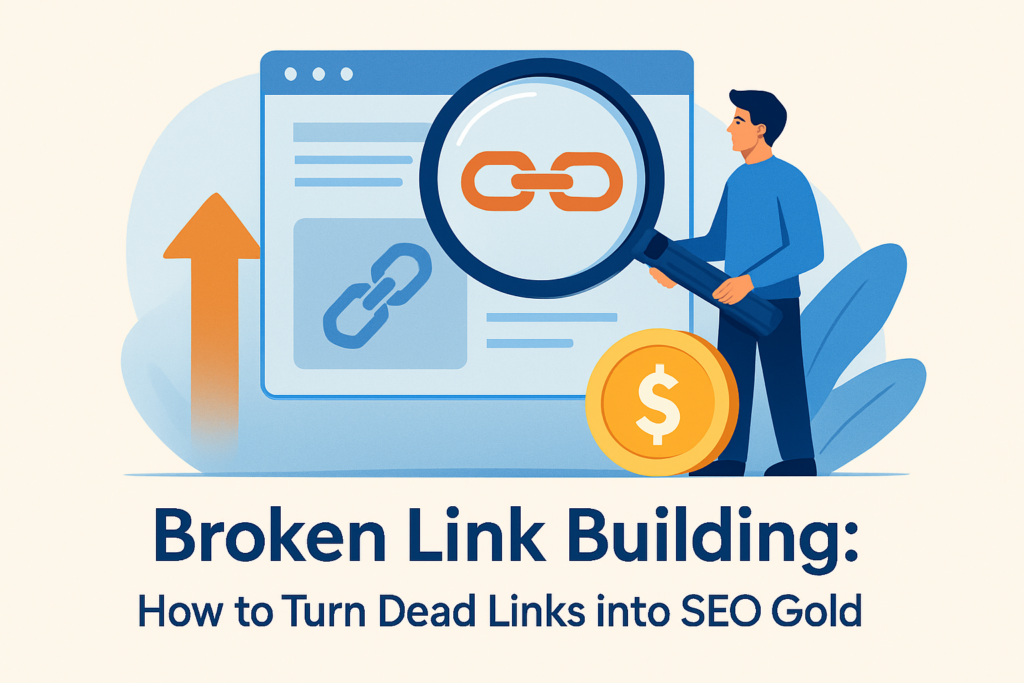
Broken link building is one of the few link acquisition tactics that still works because it aligns incentives for everyone involved: the publisher fixes a problem, the user gets a better experience, and your site earns a relevant backlink. At its core, broken link building means finding dead outbound links on other websites, creating or matching content that deserves to replace them, and then reaching out with a useful suggestion. In a search landscape shaped by classic ranking signals, answer engines, and generative AI, that combination of usefulness and relevance matters more than ever.
For business owners, marketers, and site managers, the appeal is obvious. You are not begging for a random link. You are solving a quality issue on someone else’s page. That makes outreach more defensible, more scalable, and usually more welcome than cold link requests. I have used this method across resource pages, old blog posts, association directories, and niche guides, and the pattern is consistent: when the replacement content is genuinely better and the outreach is specific, response rates improve.
Broken link building also supports broader visibility goals beyond traditional SEO. Search engines interpret high-quality backlinks as trust and authority signals. At the same time, authoritative mentions and citations influence whether your brand appears in AI-generated answers. If you are trying to improve both organic rankings and AI visibility, this tactic can support both. That is one reason many teams now pair link acquisition with GEO tracking using LSEO AI, which helps brands monitor visibility, prompts, and citation performance across the AI ecosystem.
To use broken link building well, you need to understand four key terms. A broken link is a hyperlink that points to a page that returns a 404, 410, or another error state. A referring page is the page containing that outbound link. A replacement asset is the page on your website that can serve the same user intent. Outreach is the email or contact process used to notify the site owner and suggest your replacement. Success depends on intent match. If the dead page was a beginner guide, your replacement should also be a beginner guide, not a product page or a thin blog post.
Why does this matter now? Because link building has become harder, editorial standards have tightened, and AI-generated content has flooded the web with low-value pages. Publishers are more careful about what they link to. Broken link building cuts through some of that noise because it starts with a real problem on a real page. Done properly, it reflects expertise, improves the web, and creates durable authority signals. Done poorly, it looks like mass outreach and gets ignored. The difference comes down to research, content quality, and disciplined execution.
How Broken Link Building Works in Practice
The broken link building process is straightforward, but each stage requires precision. First, identify relevant pages in your niche that are likely to contain resource links. These often include pages with titles such as “helpful resources,” “recommended tools,” “industry statistics,” “best guides,” or “further reading.” You can find them with search operators like intitle:resources plus your topic, or by using SEO tools such as Ahrefs, Semrush, Screaming Frog, and Check My Links. Ahrefs is especially useful for finding broken outbound links and analyzing link opportunities at scale.
Second, verify that the link is truly broken and understand what used to be there. The Wayback Machine is essential here. It lets you inspect historical versions of the dead page so you can determine the original topic, format, and depth. This is where many campaigns fail. People see a broken link about “email deliverability best practices,” then pitch a generic article about email marketing. That is not a replacement. It is a mismatch. Editors notice immediately.
Third, create or refine the replacement content. Sometimes you already have a suitable page. More often, you need to update an existing piece or build a better version from scratch. The best replacement assets are comprehensive, current, visually clean, and easy to cite. They answer the same core question as the dead page while improving on freshness and usability. In practical terms, that means updated examples, better formatting, clearer definitions, and stronger source support.
Fourth, conduct personalized outreach. A good email identifies the broken link, names the page where it appears, briefly explains why it matters, and offers your replacement as one possible fix. The tone should be helpful, not transactional. The goal is not to trick someone into linking to you. The goal is to save them time while improving their page.
Fifth, track results. Measure not just links won, but also placements by domain quality, topical relevance, referral traffic, and downstream ranking improvements. If your content begins attracting links without outreach after the first few placements, you know you created a genuinely useful asset. To connect traditional SEO gains with AI-era visibility, many teams use LSEO AI to see whether new authority signals are also improving brand mentions and citations inside generative platforms.
Where to Find the Best Broken Link Opportunities
Not all broken links are worth pursuing. The best opportunities sit on pages that are topically aligned, indexed, maintained, and capable of sending either authority or qualified traffic. In most campaigns, I prioritize five categories: resource pages, university or nonprofit guides, trade association directories, evergreen industry blog posts, and journalistic roundups that cite tools or research. These pages tend to have stronger editorial standards and more durable link equity than low-quality list posts.
Relevance is the first filter. If you sell accounting software, a broken link on a finance association resource page is better than a random marketing blog with higher raw authority. Search engines evaluate topical relationships, not just domain metrics. The second filter is page quality. Look for clean structure, useful content, and signs the site is still maintained. A page that has not been updated in eight years may still pass value, but outreach success will be lower if nobody monitors the inbox.
The third filter is replacement feasibility. Ask a simple question: can you credibly create the best substitute for the dead page? If the original was an academic research paper, and you only have a commercial landing page, skip it. If the original was a practical tutorial and you can build a stronger version with current examples, proceed. This discipline prevents wasted outreach and protects your brand.
| Opportunity Type | Why It Works | Main Risk | Best Replacement Content |
|---|---|---|---|
| Resource pages | Editors expect outbound references | Many are rarely maintained | Definitive guides and tool explainers |
| Association directories | High trust and topical relevance | Strict editorial review | Educational pages, not sales pages |
| Evergreen blog posts | Often rank and attract traffic | Original author may be gone | Updated tutorials with examples |
| University or nonprofit pages | Strong authority and citation value | Harder outreach paths | Neutral, factual reference content |
A practical example helps. Suppose you run a cybersecurity company and find a broken link on a university page that once pointed to a guide on password hygiene. You inspect the archived version, build a more current page covering passkeys, password managers, MFA, and phishing-resistant practices, then contact the webmaster with the exact broken URL and your updated resource. That is a strong opportunity because the topical match is tight, the replacement is better, and the host site has clear reason to care.
Creating Replacement Content That Editors Actually Want to Link To
The quality of your replacement asset determines the ceiling of your campaign. Editors do not replace a dead link just because you asked nicely. They replace it when your page preserves or improves the value their readers were supposed to receive. That means your content must be built for editorial trust first and SEO second.
Start by matching intent exactly. If the dead page answered “what is endpoint detection and response,” your replacement should answer that question directly in the opening section, then expand with examples, implementation guidance, and comparisons. If the original was a checklist, consider publishing a checklist. If it was a statistics page, create a statistics page and cite sources clearly. Format match matters because publishers chose the original for a reason.
Next, improve substance. Add current data, clearer headings, better visuals where appropriate, and practical examples. If the old page was thin, this is your chance to become the obvious upgrade. If the old page was excellent but outdated, your advantage is freshness. Reference recognized frameworks when relevant, such as E-E-A-T principles for content trust, WCAG for accessibility considerations, NIST standards for cybersecurity topics, or Google Search Console and Google Analytics for performance validation. Naming established frameworks signals authority and helps both human editors and AI systems understand that your content is grounded in accepted standards.
Avoid turning the page into a product pitch. Commercial intent is acceptable, but the page must stand on its own as a resource. In many campaigns, the highest-converting approach is a hub-and-spoke model: publish a neutral educational guide as the linkable asset, then connect it internally to product, service, or conversion pages. That lets the editorial page earn links while your site still benefits commercially through internal linking and user flow.
One more consideration matters in 2026: write for extraction. Answer engines and generative engines often surface concise definitions, tables, steps, and clearly framed explanations. If your replacement asset is easy to quote, summarize, and cite, it has a better chance of becoming both a link magnet and an AI citation source. This is where a platform like LSEO AI becomes useful. It helps you understand which prompts trigger visibility, where competitors appear instead of you, and how your authority is expressed across AI experiences.
Stop guessing what users are asking. Traditional keyword research isn’t enough for the conversational age. LSEO AI’s Prompt-Level Insights unearth the specific, natural-language questions that trigger brand mentions—or, more importantly, the ones where your competitors are appearing instead of you. The LSEO AI Advantage: Use 1st-party data to identify exactly where your brand is missing from the conversation. Get Started: Try it free for 7 days at LSEO.com/join-lseo/
Outreach Strategy, Templates, and Common Mistakes
Outreach succeeds when it is specific, brief, and clearly helpful. The best-performing emails I have sent usually follow a simple structure: a relevant subject line, one sentence identifying the problem, one sentence showing exactly where it appears, one sentence suggesting a replacement, and a polite close. That is enough. Long emails reduce response rates because they force the recipient to do more work.
A subject line like “Broken link on your analytics resources page” usually outperforms vague alternatives. In the body, include the page title, the dead destination, and your replacement URL. If appropriate, mention one reason your page is useful, such as updated 2026 examples or a clearer walkthrough. Avoid fake flattery, manipulative urgency, and generic templates that could have been sent to anyone.
There are also predictable mistakes. The biggest is irrelevance. The second is sending people to a homepage or service page instead of an editorial resource. The third is failing to verify whether the link is actually broken. Redirect chains, temporary server errors, and geo-specific issues can create false positives. The fourth is poor targeting. If the contact is an editorial director, write differently than you would to a university webmaster or a small business owner.
Follow-up matters, but restraint matters more. One follow-up after five to seven business days is reasonable. Two can work in enterprise contexts. More than that usually becomes counterproductive. Keep every follow-up additive, such as clarifying the exact anchor location or noting that you also noticed another outdated resource on the page. Make it easy for the recipient to act.
If you manage outreach at scale, maintain a clean system. Track prospects, contact attempts, outcomes, and linked URLs in a spreadsheet or CRM. Tag prospects by vertical, authority, contact type, and campaign. This makes it easier to identify what is actually working. In my experience, the highest returns come from smaller, well-researched prospect lists with tightly matched replacement assets, not from blasting thousands of contacts.
How Broken Link Building Supports SEO, AEO, and GEO Together
Traditional SEO still benefits directly from broken link building because relevant backlinks remain a ranking signal. They help discovery, reinforce topical authority, and support stronger internal page performance. But the impact now extends beyond blue links. As AI-driven search interfaces grow, authority is increasingly measured by whether your content is useful enough to be cited, summarized, or referenced in generated answers. A strong backlink profile does not guarantee AI visibility, but it contributes to the trust environment those systems use.
This is why modern link building should not be isolated from content structure and visibility measurement. If your replacement page earns links but is vague, thin, or hard to extract information from, it may help rankings without helping answer engines. If it is precise, well-structured, and supported by first-party performance data, it is more likely to support both. That is the overlap between SEO, AEO, and GEO.
Accuracy you can actually bet your budget on. Estimates don’t drive growth—facts do. LSEO AI stands apart by integrating directly with your Google Search Console and Google Analytics. By combining your 1st-party data with our AI visibility metrics, we provide the most accurate picture of your brand’s performance across both traditional and generative search. The LSEO AI Advantage: Data integrity from a 3x SEO Agency of the Year finalist. Get Started: Full access for less than $50/mo at LSEO.com/join-lseo/
If you need strategic support, software alone is not always enough. Some organizations benefit from agency guidance on content architecture, outreach systems, and AI visibility planning. In those cases, it is worth reviewing LSEO’s Generative Engine Optimization services. LSEO has also been recognized among the top GEO agencies in the United States, which is relevant when you need both execution and a framework for measuring AI performance.
The larger point is simple: broken link building is no longer just a tactical link play. When executed with strong replacement content and proper measurement, it becomes part of a broader authority-building system that improves rankings, referral traffic, citations, and discoverability across search experiences.
Broken link building turns dead links into SEO gold when you treat it as editorial problem-solving, not shortcut link acquisition. The method works because it starts with relevance, adds value, and rewards quality. Find pages in your niche with broken outbound references, study what used to be there, publish a better resource that matches the original intent, and send concise outreach that helps the publisher fix the issue. That is the formula.
The details matter. Prioritize relevant, maintained pages over raw domain metrics. Use the Wayback Machine to understand the original asset. Build replacement content that is current, trustworthy, and easy to cite. Keep outreach short and specific. Track outcomes by quality, not just quantity. When these pieces are aligned, broken link building can produce durable backlinks that support both rankings and brand authority.
Just as important, this tactic fits the current search environment. The same content qualities that earn editorial links also increase your chance of being surfaced in answer engines and generative search. If your brand wants a clearer view of how authority translates into AI visibility, start by measuring it. LSEO AI gives website owners an affordable way to track citations, uncover prompt-level opportunities, and connect first-party performance data to AI discovery. Unearth the AI prompts driving your brand’s visibility. Start your 7-day FREE trial of LSEO AI today—then just $49/mo.
Frequently Asked Questions
1. What is broken link building, and why does it still work for SEO?
Broken link building is a link acquisition strategy where you find dead outbound links on relevant websites, identify what the original link was meant to support, and then suggest your own high-quality page as a replacement. The reason it still works is simple: it solves a real problem for the site owner. You are not asking for a backlink without context. You are helping a publisher repair a broken user experience, maintain editorial quality, and restore access to useful information for readers. In return, your site may earn a relevant backlink.
From an SEO perspective, this tactic aligns with signals search engines have valued for years: relevance, editorial discretion, topical fit, and usefulness. A link earned through broken link building is often placed naturally within existing content, surrounded by related context, which makes it more meaningful than a random directory listing or low-quality placement. It also tends to be more sustainable because the link exists for the reader first, not just for search engines.
Another reason broken link building continues to perform is that it benefits all sides involved. The publisher fixes an issue, the user avoids landing on a 404 page, and your business gains visibility and authority. That incentive alignment is rare in outreach. When done well, broken link building is less about “getting links” and more about resource replacement. That shift in mindset is exactly why it remains one of the more practical and white-hat link building methods available.
2. How do you find good broken link building opportunities?
The best opportunities usually come from relevant websites that already link out to content similar to yours. A good starting point is identifying industry blogs, resource pages, guides, university pages, nonprofit resource hubs, and curated article lists in your niche. Once you have a list of target sites, you can use SEO tools, browser extensions, or crawling software to detect broken outbound links. Many link builders also use search operators to find pages likely to contain external resources, such as “keyword + resources,” “keyword + useful links,” or “keyword + recommended tools.”
Not every broken link is worth pursuing. The strongest prospects meet a few criteria: the referring page is topically relevant, the broken link clearly supported a subject your site can cover well, and the page itself appears maintained and credible. It also helps if the page has some authority or earns traffic, but relevance should come before vanity metrics. A highly relevant link from a solid niche site is often more valuable than a loosely related link from a bigger but less appropriate domain.
To improve efficiency, many SEO professionals also look at broken backlinks pointing to competitors or defunct content in their space. If a once-popular resource has disappeared, that can create multiple replacement opportunities across many domains. In those cases, you are not just finding one dead link. You may be uncovering a pattern of pages that all need the same type of replacement asset. That makes your outreach more scalable and gives you a better return on the content you create.
3. Do I need to recreate the exact dead page, or can I pitch an existing article?
You do not always need to recreate the dead page exactly, but your replacement should satisfy the same search intent and editorial purpose. Before reaching out, it is important to understand what the broken page originally offered. You can often do this by checking anchor text, surrounding copy, historical snapshots, or old URL structures. If the dead link pointed to a statistics page, a definition guide, a case study, or a how-to tutorial, your replacement should deliver comparable value in a current, trustworthy format.
If you already have a page that genuinely fits, using that existing content is often the fastest path. However, if your current page only loosely matches the original resource, outreach is less likely to convert. Editors can usually tell when a suggestion is self-serving rather than helpful. In those cases, it is smarter to improve the existing article or create a new asset that better aligns with what readers were meant to find. The closer the fit, the easier it is for a publisher to say yes.
The most effective approach is not to copy the old page word for word, but to create something better: more current, more complete, easier to navigate, and more credible. That could mean adding updated examples, citing stronger sources, improving design, or expanding the content so it is genuinely useful. Broken link building works best when your replacement is not merely “good enough,” but clearly deserving of the spot. That is what turns a cold outreach email into a credible editorial recommendation.
4. What makes a broken link outreach email effective?
An effective broken link outreach email is clear, brief, specific, and genuinely helpful. The goal is not to impress the recipient with a clever pitch. It is to make it easy for them to see the issue and take action. A strong email typically points out the exact page where the broken link appears, identifies the dead URL or at least the anchor text, and offers a relevant replacement resource. This reduces friction and shows that you actually reviewed their content rather than blasting a generic template to hundreds of sites.
Tone matters just as much as structure. The best emails feel like a useful heads-up from someone who noticed a problem, not a demand for a favor. Avoid over-selling, exaggerated claims, or language that makes the message feel transactional. You should also avoid making the outreach entirely about your brand. Lead with the broken link and the user experience issue, then introduce your resource as a possible replacement if they are updating the page anyway. That framing is far more persuasive because it centers the publisher’s needs.
Personalization can improve response rates, but it should be practical rather than forced. Mentioning the page title, a specific section, or why your replacement fits is usually enough. Long compliments and obviously automated flattery tend to weaken credibility. In most cases, the winning formula is simple: identify the problem, provide the solution, and make the next step easy. Editors are busy, so respectful brevity combined with relevance usually outperforms overly elaborate outreach scripts.
5. How can I measure the success of a broken link building campaign?
Success should be measured at several levels, not just by counting how many emails you sent or how many links you earned. At the top level, you want to track placements: how many broken link opportunities turned into live backlinks, which domains linked to you, which pages on your site received those links, and whether the links remain live over time. These are your direct campaign outcomes, and they help you understand conversion rates across prospecting, content matching, and outreach.
Beyond placements, look at SEO and business impact. Monitor whether the linked pages gain improvements in rankings, organic traffic, referral traffic, and keyword visibility. If your replacement content is well-built and the acquired links are relevant, you may see stronger performance over time, especially if multiple sites link to the same asset. It is also useful to evaluate link quality rather than link quantity alone. A handful of editorially placed, niche-relevant backlinks can be more valuable than a large number of weak placements.
Finally, use campaign data to refine your process. Compare which outreach angles get replies, which types of pages convert best, and whether new content performs better than existing content used as a replacement. You may discover that resource pages outperform blog posts, or that highly specific educational assets earn more placements than broad commercial articles. When you treat broken link building as a repeatable system rather than a one-off tactic, measurement becomes a strategic advantage. It helps you improve targeting, create better replacement resources, and steadily turn dead links into lasting SEO value.