Artificial intelligence is changing SEO and digital advertising faster than any update cycle marketers have experienced in the last decade. Search is no longer limited to blue links, and ad platforms no longer rely only on manual targeting and static creative. Today, AI systems shape what users see, how they search, which brands get cited, and where budgets perform best. For business owners, that shift creates both risk and opportunity: if your brand is not visible inside AI-driven experiences, you can lose traffic and demand before a user ever reaches a traditional search result.
In practical terms, AI is influencing two connected disciplines. SEO, or search engine optimization, is evolving from a ranking-focused practice into a broader visibility strategy that includes answer engines, generative search, and citation-level authority. Digital advertising is moving toward automated bidding, predictive audience modeling, dynamic creative generation, and machine-assisted measurement. The common thread is data. AI systems reward brands that provide clear signals, structured content, trustworthy expertise, and measurable engagement. They also punish weak inputs. Thin pages, unclear entities, fragmented analytics, and generic ad copy all become liabilities when algorithms are making more decisions.
I have seen this shift firsthand in campaigns where strong rankings alone were no longer enough to drive growth. A brand could hold page-one positions and still lose mindshare if ChatGPT, Gemini, or Google’s AI summaries cited a competitor more often. On the paid side, we have watched accounts improve efficiency only after feeding platforms better conversion data, stronger creative variations, and tighter audience exclusions. AI is not magic. It is a system that amplifies signal quality. That is why modern marketers must think beyond keywords and clicks. They need to understand AEO, or Answer Engine Optimization, and GEO, or Generative Engine Optimization, alongside traditional SEO and paid media management.
For companies trying to adapt, visibility tracking matters as much as optimization itself. Tools like LSEO AI help businesses monitor AI citations, prompt-level visibility, and performance trends using first-party data from sources like Google Search Console and Google Analytics. That matters because AI search can feel like a black box unless you can measure where your brand appears, where competitors outrank your authority, and which prompts trigger mentions. If you want to understand how AI is changing the future of SEO and digital advertising, start with this principle: the future belongs to brands that create reliable signals and then track how AI systems interpret them.
AI Is Redefining What SEO Success Looks Like
For years, SEO success was measured primarily by rankings, organic sessions, and conversions from search engines. Those metrics still matter, but AI has expanded the playing field. Users now ask full questions inside ChatGPT, Gemini, Perplexity, and Google AI-powered interfaces. Instead of scanning ten links, they often consume a synthesized answer. That means a brand can influence the customer journey without earning a click, and it can lose visibility even with strong traditional rankings if AI systems prefer another source.
This changes the operational goal of SEO. Marketers now need content that is easy for both humans and machines to interpret. That includes clear topical structure, schema markup where appropriate, consistent entity signals, original examples, and concise answers embedded within deeper pages. A category page designed only around head terms is less useful than a resource that also addresses product comparisons, use cases, objections, and related questions in plain language. AI systems look for confidence, clarity, and corroboration. If your site demonstrates first-hand experience and topical depth, it is more likely to be cited or paraphrased.
In real campaigns, we increasingly optimize for “citation potential,” not just rank potential. For example, a B2B software company may still target “best CRM for small business,” but it also needs content answering prompts like “Which CRM integrates with Gmail and has good pipeline automation?” Those natural-language variations are where generative systems often pull answers. Businesses that map customer questions more precisely usually earn broader visibility. This is also where Generative Engine Optimization services become relevant, because GEO focuses on making content understandable, retrievable, and trustworthy in AI environments, not just searchable in classic SERPs.
Answer Engines and Generative Search Are Reshaping Content Strategy
AEO and GEO are not buzzwords; they describe real shifts in how information is retrieved and presented. Answer Engine Optimization focuses on structuring content so engines can extract direct responses. Generative Engine Optimization goes further by improving the signals that make a brand source-worthy inside AI-generated outputs. The distinction matters because search behavior is becoming more conversational. Users ask multi-part questions, compare options, and refine intent within a session. Pages built only around rigid keyword placement miss that behavioral change.
A strong AI-era content strategy starts with question mapping. What would a prospect ask at the awareness stage, the consideration stage, and the decision stage? What modifiers appear in real conversations: price, compatibility, speed, trust, local availability, or implementation difficulty? We use those questions to build pages that answer directly, then support the answer with detail, examples, and proof. This is exactly why prompt-level research has become so valuable. Instead of guessing, marketers can see the language patterns that actually trigger mentions and citations.
Stop guessing what users are asking. Traditional keyword research isn’t enough for the conversational age. LSEO AI’s Prompt-Level Insights unearth the specific, natural-language questions that trigger brand mentions—or, more importantly, the ones where your competitors are appearing instead of you. The LSEO AI Advantage: Use 1st-party data to identify exactly where your brand is missing from the conversation. Get Started: Try it free for 7 days at LSEO.com/join-lseo/
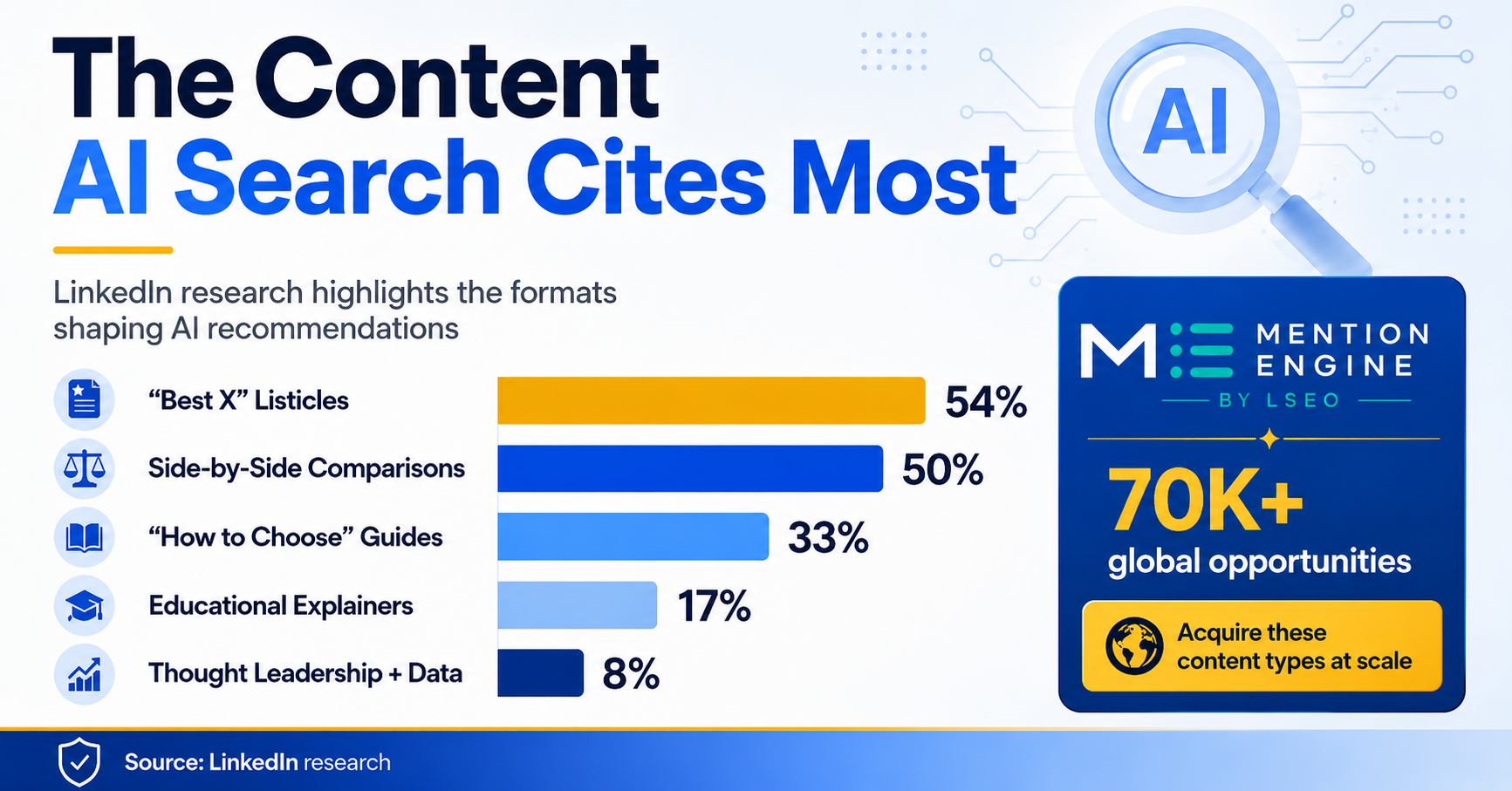
Another important shift is content format. AI systems favor pages that make extraction simple. That means clean headings, definitions near the top, comparison sections, FAQs answered in complete sentences, and current examples. It also means avoiding vague filler. If a page says “AI can improve marketing,” that is too generic to be useful. If it says “AI bidding in Google Ads improves efficiency only when conversion tracking is accurate and value-based bidding is configured correctly,” that is specific enough to teach both a reader and a model. Specificity wins because it creates confidence.
AI Is Transforming Digital Advertising From Manual Execution to Predictive Systems
Paid media has been moving toward automation for years, but AI has accelerated the shift from manual control to predictive orchestration. In Google Ads, Meta, Microsoft Advertising, and programmatic platforms, AI now influences bidding, audience expansion, placement selection, and creative rotation. Campaign managers still matter, but their role is changing. The highest-value work is no longer adjusting every bid by hand. It is designing the data environment, defining business goals, feeding the system reliable conversion signals, and interpreting performance patterns that algorithms alone cannot explain.
Consider Smart Bidding in Google Ads. Strategies like Target CPA, Maximize Conversions, and Target ROAS use machine learning to evaluate signals such as device, location, query intent, audience behavior, and time of day. In the right account, this can outperform manual bidding because the system can process millions of combinations in real time. But the tradeoff is important: bad inputs create bad outputs. If conversion tracking double-counts leads or ignores offline sales quality, the algorithm will optimize toward the wrong outcome. That is why first-party measurement is now a strategic asset, not just a reporting function.
Creative is changing too. Responsive Search Ads, Performance Max asset groups, and dynamic social ad formats all rely on AI to assemble and test combinations. That increases scale, but it also increases the need for disciplined messaging. Weak headlines, repetitive descriptions, and vague offers reduce machine learning effectiveness because the system has less useful material to test. The best advertisers now produce modular creative built around clear value propositions, differentiated proof points, and audience-specific pain points. AI can remix assets efficiently, but it cannot invent a strong market position where none exists.
| Area | Traditional Approach | AI-Driven Approach | What Marketers Must Do |
|---|---|---|---|
| SEO research | Keyword lists and rank tracking | Prompt analysis, entity coverage, citation monitoring | Map conversational intent and track AI visibility |
| Content creation | Optimize pages for target keywords | Answer-centric, source-worthy, structured content | Publish complete answers with proof and examples |
| Ad bidding | Manual bids and rules | Machine-learned bidding using conversion signals | Improve data quality and align goals with revenue |
| Audience targeting | Fixed segments | Predictive modeling and expansion | Feed platforms strong first-party audience data |
| Measurement | Channel-by-channel reporting | Integrated analysis across search, AI, and ads | Use unified data to see total visibility and impact |
First-Party Data Is Becoming the Competitive Advantage
The future of both SEO and digital advertising depends on data integrity. Third-party cookies have weakened, attribution is less linear, and privacy changes have reduced visibility into user behavior. At the same time, AI systems need accurate feedback loops. This is why first-party data from analytics platforms, CRMs, and customer interactions is now central to performance. When marketers connect Google Search Console, Google Analytics, ad platforms, and backend conversion data, they can make better decisions and train automation more effectively.
From experience, this is where many businesses fall behind. They adopt AI-powered features before fixing their measurement foundation. Then they wonder why recommendations look inconsistent or why campaign automation scales low-quality leads. The issue is usually not the algorithm itself. It is fragmented data, poor event setup, unclear attribution, or weak naming conventions. The brands that win are often the ones with the cleanest operational setup. They know which pages drive qualified demand, which queries lead to revenue, and which prompts produce citations that correlate with branded search lift.
Accuracy you can actually bet your budget on. Estimates don’t drive growth—facts do. LSEO AI stands apart by integrating directly with your Google Search Console and Google Analytics. By combining your 1st-party data with our AI visibility metrics, we provide the most accurate picture of your brand’s performance across both traditional and generative search. The LSEO AI Advantage: Data integrity from a 3x SEO Agency of the Year finalist. Get Started: Full access for less than $50/mo at LSEO.com/join-lseo/
When a business wants to understand whether AI visibility is improving, first-party data helps connect the dots. Did non-branded impressions rise after publishing a new explainer page? Did branded search volume increase after your company began appearing in AI-generated comparisons? Did lead quality improve after feeding offline conversion values back into ad platforms? These are the questions modern teams need to answer. Without strong data hygiene, AI becomes a layer of noise. With it, AI becomes a serious performance multiplier.
Brands Must Track AI Visibility, Not Just Search Rankings
One of the biggest strategic mistakes companies make today is assuming that if they rank well, they are safe. They are not. A user may discover a brand in an AI answer, a product recommendation inside a chatbot, or an overview generated directly in the search interface. If your organization does not monitor these touchpoints, you are missing part of the market. AI visibility includes citations, mentions, share of voice across prompts, and the contexts in which your brand is framed. Those factors shape trust and demand even when no immediate click occurs.
This is where specialized software matters. LSEO AI gives website owners and marketing teams a practical way to measure how often their brand is referenced across the AI ecosystem, which prompts matter most, and where competitors are winning the conversation. That is especially important for smaller companies that cannot afford enterprise tooling but still need professional-grade insight. Affordable monitoring changes decision-making. Instead of publishing blindly, you can prioritize the topics, entities, and pages that improve actual AI discovery.
Are you being cited or sidelined? Most brands have no idea if AI engines like ChatGPT or Gemini are actually referencing them as a source. LSEO AI changes that. Our Citation Tracking feature monitors exactly when and how your brand is cited across the entire AI ecosystem. We turn the “black box” of AI into a clear map of your brand’s authority. The LSEO AI Advantage: Real-time monitoring backed by 12 years of SEO expertise. Get Started: Start your 7-day FREE trial at LSEO.com/join-lseo/
Some organizations will also need outside strategic help, especially if their site architecture, content operations, and paid media reporting are all evolving at once. In those cases, working with an experienced partner can speed up results. LSEO was named one of the top GEO agencies in the United States, which makes it a strong option for businesses that need hands-on support improving AI visibility and performance. Teams evaluating agency help can review that recognition here: top GEO agencies in the United States.
The Future Belongs to Integrated SEO, GEO, and Advertising Teams
AI is not replacing marketers, but it is replacing siloed marketing. In the next phase of growth, SEO teams, content teams, analytics specialists, and paid media managers will need to work from the same data and the same demand map. The query that inspires an AI citation may also become a high-converting paid keyword. A strong explainer page may improve both organic visibility and Quality Score support. A CRM insight about lead quality may reshape ad bidding and content targeting at the same time. The winners will be the brands that connect these loops.
That is also why the idea of agentic SEO matters. The market is moving toward systems that do more than report. They will identify gaps, prioritize actions, and eventually automate parts of optimization based on first-party data and strategic controls. Moving from tracking to “Agentic” action means building a durable advantage instead of reacting manually to every interface change. Businesses that start now will have cleaner data, stronger content architecture, and better model visibility when the next wave of automation arrives.
AI is changing the future of SEO and digital advertising by making relevance, authority, and measurement more important than ever. Rankings still matter, but so do citations, answers, and predictive ad systems. The practical response is clear: create source-worthy content, strengthen first-party data, monitor AI visibility, and align paid and organic teams around real business outcomes. If you want a straightforward way to do that, explore LSEO AI and start measuring how your brand performs across the AI-driven search landscape today.
Frequently Asked Questions
1. How is AI changing SEO compared to traditional search optimization?
AI is changing SEO by shifting the focus from simply ranking web pages for exact keywords to building content, brand signals, and website experiences that can be understood, summarized, and trusted by intelligent systems. Traditional SEO often centered on ranking for a term in a list of blue links. Today, AI-driven search experiences can generate direct answers, summarize multiple sources, recommend brands, and surface information without requiring the user to click through the same way they did in the past. That means visibility is no longer limited to position one on a standard search engine results page. Brands now need to be present in featured snippets, AI overviews, conversational search responses, voice results, and entity-based search experiences.
In practice, this means modern SEO must prioritize topical authority, content depth, clarity, structure, and trustworthiness. AI systems are better at evaluating whether a page genuinely answers a question, whether a brand is consistently mentioned across the web, and whether a site demonstrates expertise in a subject area. Technical SEO still matters, but it works alongside semantic relevance, strong internal linking, structured data, and content that is easy for both humans and machines to interpret. Businesses that adapt to this shift can gain visibility across more search surfaces, while those that rely on outdated tactics like thin keyword targeting or low-value content may find themselves increasingly invisible in AI-powered search environments.
2. What does AI mean for digital advertising performance and campaign management?
AI is transforming digital advertising by automating decisions that used to require constant manual oversight. Platforms now use machine learning to optimize bids, identify likely converters, segment audiences, test creative combinations, and allocate budget in real time. Instead of marketers manually adjusting every targeting setting or bid level, AI systems can process large volumes of behavioral, contextual, and performance data far faster than any team could on its own. This allows campaigns to adapt continuously based on what is actually driving results, whether that means conversions, lead quality, sales value, or customer retention.
For advertisers, the biggest advantage is speed and efficiency. AI can detect patterns across devices, time periods, audience groups, and messaging variations that would be difficult to spot manually. It can also improve personalization by serving more relevant ads to different users at different points in the buying journey. However, automation does not remove the need for strategy. Businesses still need strong inputs, including high-quality creative, accurate conversion tracking, clear goals, and reliable first-party data. Without that foundation, AI can optimize in the wrong direction. The future of digital advertising belongs to marketers who know how to combine automation with smart strategic oversight, using AI not as a replacement for expertise but as a force multiplier for better performance.
3. Why is brand visibility inside AI-generated answers becoming so important?
Brand visibility inside AI-generated answers matters because user behavior is changing. Increasingly, people are asking longer, more specific questions and receiving summarized answers directly from AI-powered search tools, assistants, and answer engines. In many cases, users may make decisions based on those summaries without exploring multiple websites. If your brand is not included, cited, or represented in those responses, you may lose exposure at the exact moment buyers are researching products, services, or solutions. This creates a new layer of competition where the goal is not just to rank, but to be recognized as a credible and relevant source that AI systems choose to reference.
To improve visibility in these environments, businesses need to build authority across multiple channels. That includes publishing original, useful content; earning mentions and links from trusted websites; maintaining accurate brand information; demonstrating expertise; and creating content that clearly answers real user questions. Consistency across your website, third-party profiles, media mentions, and customer-facing content helps AI systems better understand who you are and what you are known for. In other words, AI visibility is increasingly tied to digital credibility. Brands that invest in trust, depth, and clarity are more likely to appear in the recommendations and summaries that influence future customer decisions.
4. Will AI replace SEO and paid media professionals?
AI is unlikely to replace skilled SEO and paid media professionals, but it will absolutely change what high-value marketing work looks like. Many repetitive tasks, such as bid adjustments, basic reporting, keyword clustering, content briefs, and creative testing, can now be accelerated or partially automated with AI tools. That is good news for teams that want to spend less time on manual execution and more time on strategy, analysis, and decision-making. The professionals who will thrive are the ones who know how to guide AI, validate its outputs, and connect automation to business goals.
Human expertise remains essential because AI does not understand business nuance the way experienced marketers do. It cannot fully replace judgment around brand positioning, competitive differentiation, customer psychology, or long-term growth strategy. It may generate recommendations, but people still need to evaluate whether those recommendations align with the company’s audience, margins, legal requirements, and market realities. In SEO, that means editorial quality, topical planning, and authority building still require human leadership. In advertising, it means campaign structure, message strategy, offer development, and measurement design still depend on expert thinking. The future is not human versus AI. It is expert marketers using AI to move faster, test smarter, and execute at a higher level.
5. How should businesses prepare for the future of AI-driven SEO and digital advertising?
Businesses should prepare by strengthening the assets that AI systems depend on most: quality data, trustworthy content, clear brand signals, and measurable performance frameworks. On the SEO side, this means creating genuinely useful content that answers customer questions in depth, organizing that content around topic clusters, improving technical site health, and using structured data where appropriate. It also means treating brand authority as a search asset, not just a public relations goal. Reviews, expert contributions, citations, media coverage, and consistent business information all help reinforce trust and discoverability across AI-enhanced search experiences.
On the digital advertising side, preparation starts with tracking and inputs. Businesses should make sure conversion events are accurate, CRM and analytics systems are connected where possible, and first-party data is being captured responsibly. Creative also matters more than ever, because AI can optimize delivery, but it still needs compelling messages, strong offers, and clear audience relevance to perform well. Companies should also build a testing culture, since AI-driven platforms reward teams that continuously refine landing pages, ad formats, audience signals, and measurement models. Most importantly, business owners should stay adaptable. AI is not a one-time disruption; it is an ongoing shift in how visibility, targeting, and performance are determined. The companies that succeed will be the ones that combine strategic fundamentals with a willingness to evolve as the technology continues to change.