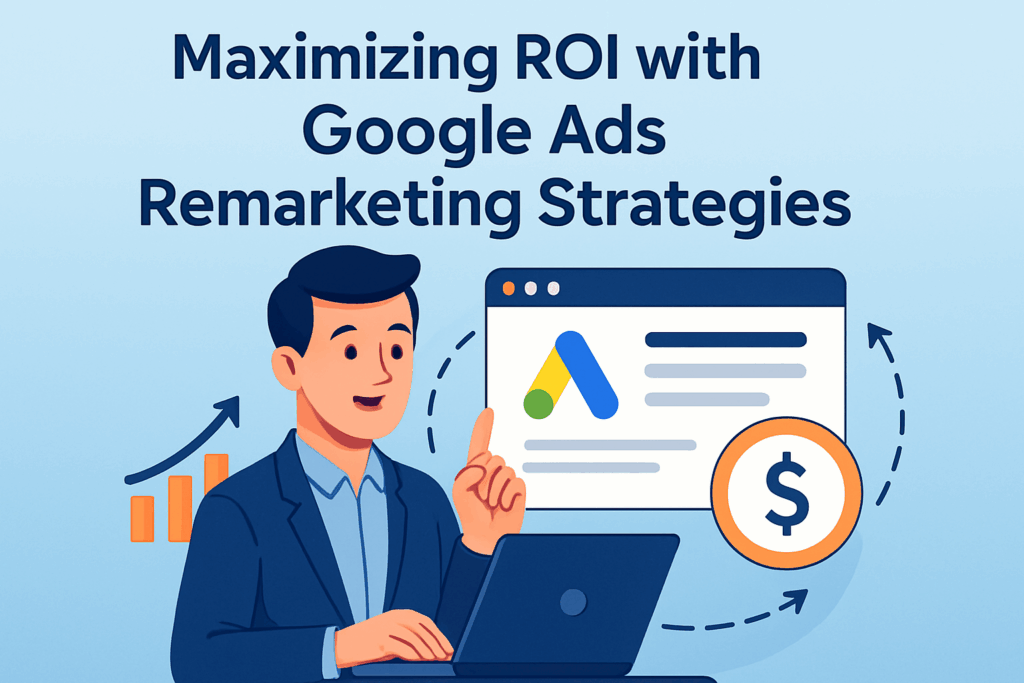
In the fast-paced, digitally dominated world of business, marketers are continually seeking innovative ways to increase the return on investment (ROI) of their advertising efforts. Google Ads Remarketing has emerged as a pivotal strategy in this context, offering businesses the ability to re-engage potential customers who have interacted with their website or app but have not yet converted. Understanding and leveraging this tool can significantly impact your advertising ROI, making it a critical component of modern digital marketing strategies.
Remarketing (often referred to as retargeting) involves identifying users who have engaged with your digital properties—whether that means visiting your website, using your app, or watching your videos—and serving them ads as they continue their online journey. This approach capitalizes on the adage that “it takes multiple interactions to convert a customer,” focusing on nurturing leads that have already shown interest in your offerings.
Why does this matter? Simply put, remarketing maximizes the efficiency of your advertising spend by targeting those who are already familiar with your brand, hence more likely to convert. The precision of Google Ads Remarketing, combined with its robust analytics, provides businesses with a sophisticated toolkit for boosting conversion rates and ultimately, their bottom line. The following sections will delve into specific strategies, accompanied by real-world applications, to illustrate the powerful impact of Google Ads Remarketing on ROI.
Understanding the Basics of Google Ads Remarketing
Google Ads Remarketing allows businesses to strategically position their ads in front of audiences who have previously interacted with their brand. This interaction can be as trivial as a page visit or as significant as adding items to a shopping cart. Essentially, remarketing targets these individuals across platforms within the Google Display Network, using cookies set on the previous visit to trigger specific ads.
A real-world example of this is the famous retail giant, Amazon. By using remarketing techniques, Amazon ensures that products you viewed recently appear in ads while you browse other sites, consistently reminding you of the items and increasing the likelihood of conversion.
In essence, Google Ads Remarketing helps in maintaining a connection, with targeted ads reminding users of their interest and encouraging them to revisit your site and complete the desired transactions. This approach not only increases conversion rates but can also enhance brand recall and loyalty over time.
Implementing Dynamic Remarketing for More Personalized Ads
Dynamic Remarketing takes the remarketing approach a step further by tailoring ads specifically to users based on their past interactions with your brand. This nuanced strategy involves dynamically creating ads that feature exact products or services a user viewed, providing a more personalized and relevant experience.
Take, for example, a user who visits an online travel agency and explores a selection of holiday packages but leaves without booking. Dynamic remarketing would allow the agency to show this user ads featuring the exact packages they viewed, possibly sweetened with a special discount for booking within a limited time frame.
The effectiveness of Dynamic Remarketing lies in its ability to personalize the user experience. By showing users ads of products or services they have already shown interest in, businesses can significantly increase their chances of conversion. Additionally, by leveraging Google’s powerful analytics tools, marketers can gather insights into user behavior, allowing for continuous optimization of ad content and targeting for maximum ROI.
Strategies for Building Effective Remarketing Lists
Efficient utilization of Google Ads Remarketing requires the creation of smart and effective remarketing lists. These lists segment your audience based on their behavior, allowing you to target specific groups with tailored ads. A correctly built remarketing list can enormously boost the effectiveness of your ads by serving content that is directly aligned with the interests and behaviors of each user segment.
For instance, an online apparel store could build separate lists for users who visited women’s clothing, men’s footwear, and accessories sections. Suppose a user who viewed women’s clothing leaves without purchase. In that case, the remarketing ad can focus specifically on new arrivals or promotions in women’s apparel, making the ad much more likely to resonate with the viewer.
Creating such segmented lists involves understanding user intent and setting up remarketing tags accordingly across your website. This precision targeting helps in crafting more compelling and action-inducing ads, thus maximizing the ROI of your campaigns.
Leveraging Custom Combinations for Tailored Remarketing Campaigns
Custom Combinations in Google Ads allow marketers to layer on additional targeting criteria to their remarketing lists, enabling extremely refined targeting strategies. This involves combining multiple remarketing lists to create rules-based groups that can further narrow down the audience you wish to reach.
A practical example is seen in the automotive industry. A car dealership can use Custom Combinations to target users who have visited the “Contact Us” page but never completed the contact form. By serving them ads promoting an exclusive dealership event or a special offer on test drives, the dealership increases the likelihood of these users converting into leads or customers.
Custom Combinations facilitate creating personalized ad experiences that cater to specific behaviors, thereby enhancing engagement and conversion rates. This technique not only provides a robust strategy for reacquiring potentially lost customers but also ensures that your ad spend is utilized more efficiently.
Optimizing Remarketing Campaign Performance with A/B Testing
A/B Testing, an invaluable method for gauging the effectiveness of various elements within your remarketing campaigns, involves creating multiple variants of an ad to determine which version performs best. This method facilitates proactive optimization by comparing elements such as imagery, messaging, call-to-action buttons, and landing pages.
For example, let’s consider an e-commerce website specializing in electronics. By running A/B tests on different ad creatives—possibly varying their design, headline, or call-to-action—marketers can determine which version drives more conversions. Over time, this data-driven approach improves ad performance, ensures higher engagement, and ultimately results in better ROI.
| Ad Variant | Conversion Rate | Engagement Level |
|---|---|---|
| Variant A | 3.5% | High |
| Variant B | 2.9% | Medium |
| Variant C | 3.8% | Very High |
By continuously experimenting with various versions and learning from the results, marketers can progressively enhance their remarketing strategies, resulting in a significant uplift in ROI.
Ensuring Continuous Success with Adaptive Bid Strategies
Adaptive Bid Strategies are a critical component in the success of remarketing efforts, allowing marketers to automatically adjust their bids to optimize for conversions. Google Ads provides several bid strategies that can be tailored to meet the specific goals of remarketing campaigns, such as maximizing conversions or enhancing return on ad spend.
For instance, a B2B software provider aiming to get potential clients to download a free trial could use the Target CPA (Cost Per Acquisition) bidding strategy. This setup allows the campaign to dynamically adjust bids to optimize for trial downloads at a pre-set cost metric, ensuring that ad spend is allocated most efficiently.
Employing adaptive bid strategies empowers businesses to make real-time optimizations based on performance data, maintain control over spending, and achieve better ROI without manual bid adjustments. This ensures that remarketing campaigns remain effective and cost-efficient in a competitive digital landscape.
Conclusion: Harnessing the Full Potential of Google Ads Remarketing
Google Ads Remarketing proves to be a powerful tool for businesses aiming to achieve high ROI by re-engaging with potential customers. By understanding its various aspects, such as Dynamic Remarketing, building effective remarketing lists, utilizing Custom Combinations, and leveraging A/B testing and adaptive bids, businesses can tailor their strategies to maximize their advertising returns.
To fully harness the power of Google Ads Remarketing, it’s essential to continuously analyze campaign performance and adapt strategies based on audience behavior and market trends. This data-driven approach ensures that businesses not only capture the attention of previous site visitors but convert them into loyal customers, reinforcing the overarching goal of higher profitability.
In closing, as you embark on optimizing your remarketing campaigns, remember to revisit and refine your strategies regularly. By doing so, you’ll forge strong connections with your target audience, drive higher conversion rates, and ultimately maximize the ROI of your advertising efforts. Get started today and watch your business objectives be fulfilled with cutting-edge Google Ads Remarketing strategies.
Frequently Asked Questions
1. What is Google Ads Remarketing and how does it help in maximizing ROI?
Google Ads Remarketing is a strategic marketing approach where you target potential customers who have previously interacted with your website or mobile app. This is a powerful tool because it allows businesses to keep their brand at the forefront of the consumer’s mind, encouraging them to return and complete a sought-after action, such as a purchase or signup. The concept operates on the basis of increased engagement leading to enhanced conversion rates. When previous visitors see your customized ads on other sites, they’re more likely to recognize and trust your brand, contributing to a higher ROI. By narrowing the audience to those who’ve already shown interest, it allows for more efficient expenditure of advertising budgets, reducing the cost per acquisition and thus maximizing ROI.
2. What types of audiences can you target with Google Ads Remarketing?
Google Ads Remarketing offers a multitude of audience targeting options which can be precisely adjusted depending on your campaign goals. These include:
- Standard Remarketing: This targets past visitors with ads on the Google Display Network. It’s an effective way to increase brand visibility and remind potential customers of your business.
- Dynamic Remarketing: It takes remarketing a step further by presenting previous site visitors with ads containing products and services they viewed on your site, tailoring the ads to their demonstrated interests.
- Remarketing Lists for Search Ads (RLSA): This allows you to customize your search ads campaign for people who have previously visited your site, and tailor those bids and ads to these visitors when they’re searching on Google.
- Video Remarketing: Targets people who’ve interacted with your YouTube videos or channel. Ads can be shown to them on YouTube or across the Google Display Network.
- Customer List Remarketing: Upload customer lists to engage with known customers across different Google platforms, offering personalized ad experiences that resonate with past interactions.
By employing these varied strategies, businesses can hone their efforts on recapturing potential leads that demonstrate a likelihood of conversion, thereby amplifying the ROI.
3. How does Dynamic Remarketing enhance effectiveness compared to Standard Remarketing?
Dynamic Remarketing elevates the ad experience by showing visitors ads tailored with specific products or services they viewed on your website, whereas standard remarketing keeps things more generalized towards brand recall with broader messaging. This level of personalization provided by Dynamic Remarketing is pivotal in enhancing ad effectiveness as it feels bespoke and directly relevant to the user’s last experience, thus heightening the click-through rate (CTR).
The compelling aspect of Dynamic Remarketing lies in its ability to dynamically create ads using content from your product feed, such as the product’s image, price, and description, directly relevant to the user’s last interaction. Imagine a user who explored your site and browsed specific products — with dynamic remarketing, when they see your ad post-visit, it features the exact same items they were interested in, creating a seamless connection that encourages them to revisit and potentially complete their purchase, leading to increased ROIs.
4. What are the key metrics to track when evaluating the success of a Google Ads Remarketing campaign?
To measure the success of your Google Ads Remarketing campaign, it is crucial to evaluate a set of key performance metrics. These include:
- Conversion Rate: Indicates the percentage of users completing a desired action (like purchase or signup) post-ad engagement. A higher conversion rate signifies a more effective remarketing strategy.
- Click-Through Rate (CTR): Shows how many people clicked on your ads. A high CTR often indicates that your ads are relevant and engaging to your target audience.
- Cost Per Conversion: Helps assess how much you’re spending to acquire a conversion. Reducing this metric while maintaining or increasing conversions indicates a strong ROI performance.
- Return on Ad Spend (ROAS): Directly reflects the efficiency of your ad spend relative to the revenue generated. A higher ROAS indicates effective ad spend allocation.
- Impressions: Tracks how many times your ads were shown. Monitoring impressions together with other metrics can offer deeper insights into the reach and frequency of your campaigns.
Regular analysis of these metrics helps refine your targeting strategy, optimize ad content, and make budget decisions that best serve the goal of maximizing ROI.
5. How do Frequency caps affect Google Ads Remarketing campaigns and why are they important?
Frequency capping is a critical component in managing Google Ads Remarketing campaigns. It allows marketers to limit the number of times an ad is shown to a user within a specific time period. This is crucial because excessive ad exposure can lead to ad fatigue, where the audience becomes desensitized to your brand messaging, or worse, develops a negative perception due to being overwhelmed by the same ad repeatedly.
By strategically setting frequency caps, you can ensure that your ads maintain a pristine level of engagement without becoming intrusive. It helps in delivering a more positive user experience and keeps your campaigns cost-effective, as resources aren’t wasted on oversaturating potential customers who have either already converted or need different messaging. Properly implemented, frequency caps help maintain the balance between visibility and profitability, ensuring the best possible return on your advertising investment.