Introduction to Effective Ad Copy
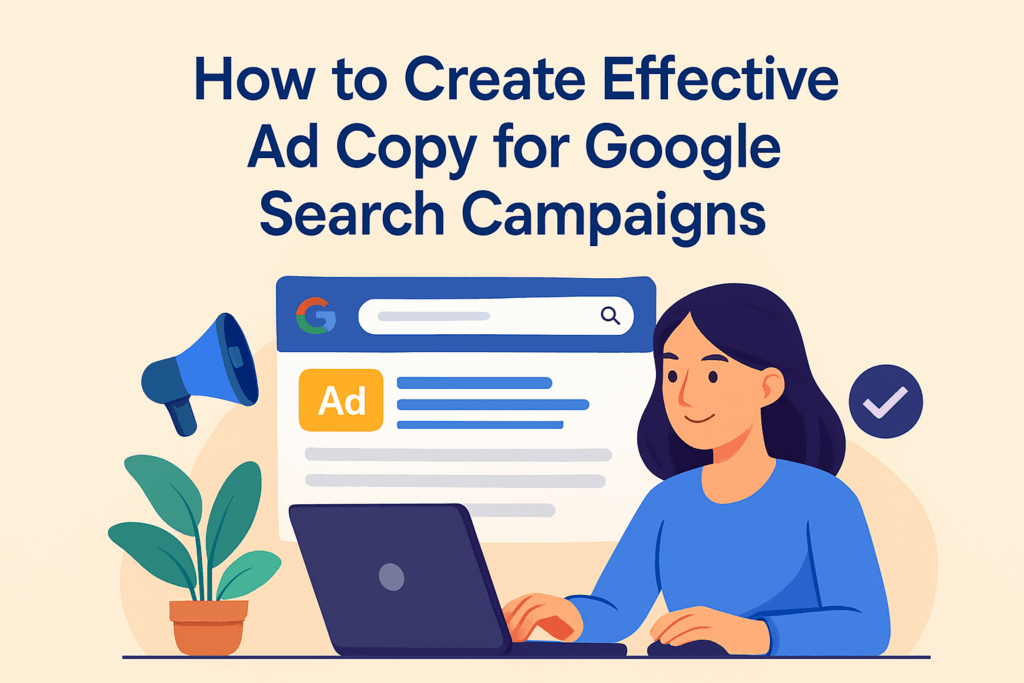
In the ever-evolving world of digital marketing, creating effective ad copy for Google Search campaigns is crucial for businesses seeking to maximize their return on investment (ROI). But what exactly is ad copy, and why does it matter so much for Google Search campaigns? Well, ad copy refers to the text participants see in search advertisements, which typically includes a headline, description, and sometimes a display URL. Crafting effective ad copy is essential because it directly influences how potential customers perceive your offering and whether they decide to click on your ad. Moreover, quality ad copy boosts your Quality Score, which in turn affects your ad’s position and the cost per click (CPC). As competition grows fiercer in the online marketplace, mastering the art of ad copy has never been more crucial.
Let’s delve into the nuances of creating compelling ad copy for Google Search campaigns, exploring strategic approaches and insightful examples to empower marketers with the tools they need for success.
The Importance of Keywords
Keywords lie at the heart of effective ad copy. These are the terms and phrases that users input into Google when searching for information. Your ad copy must contain relevant keywords to ensure your ads appear for the right searches. Including keywords increases the click-through rate (CTR) by making your ad more aligned with the user’s intent.
Consider a real-world scenario: a flower shop aiming to attract more customers via online search advertising. They might use keywords like “buy flowers online,” “flower delivery,” and “florist near me” in their ad copy. By seamlessly integrating these keywords into their ad text, they ensure the ad is triggered whenever someone searches with those terms, effectively positioning the ad to attract clicks from people intent on purchasing flowers.
To use keywords effectively:
- Perform comprehensive keyword research using tools like Google’s Keyword Planner to identify high-intent keywords.
- Incorporate keywords naturally into your ad text, avoiding forced or irrelevant usage.
- Make use of dynamic keyword insertion to boost ad relevance automatically.
Crafting Catchy Headlines
Headlines are the first aspect of your ad that users notice, so crafting a catchy headline is key to drawing their attention. A compelling headline should be relevant, engaging, and capable of resonating instantly with the audience.
For instance, imagine you’re advertising a new fragrance line. A headline like “Discover Your Signature Scent: Special Offer Inside” piques interest and promises a unique experience while including an enticing call to action. The headline effectively meets the goals of capturing attention and urging users to learn more.
When crafting headlines, consider these strategies:
- Use numbers or lists to draw in skimmers, such as “Top 5 Tips for Beautiful Skin.”
- Emphasize urgency or exclusivity, e.g., “Limited Time Offer: Shop Now to Save 50%!”
- Directly address pain points or desires, like “Achieve Flawless Skin with Our Secret Formula.”
Enhancing Descriptions with Benefits and Features
While headlines grab attention, the description plays a crucial role in maintaining interest and providing necessary information. The description is where marketers should highlight the specific benefits and features of their product or service, explaining precisely why the target audience should choose them over competitors.
An example is an ad for a fitness app: The description could read, “Access Exclusive Workouts and Track Your Progress with Our Innovative Fitness App. Download Now and Start Your Transformation Journey!” This copy clearly communicates the app’s value through phrases like “exclusive workouts” and “innovative,” paired with a call to action, “Download Now.”
Follow these tips for compelling descriptions:
- Focus on the benefits and results users will experience by choosing your product.
- Maintain a friendly, approachable tone while keeping language professional.
- Keep your message clear and concise, as users seek quick and easy-to-understand information.
Utilizing Calls to Action
Without a solid call to action (CTA), even the most elaborate ad copy can fall flat. Calls to action are phrases aimed at urging users to take a specific action, such as “Buy Now,” “Sign Up Today,” or “Get Started Free.” Including a powerful CTA instills a sense of purpose, motivating audiences to proceed beyond passive browsing.
Consider an ecommerce site seeking to engage customers in online shopping. Instead of using generic CTAs, the business could employ tailored CTAs, such as “Discover Our Latest Collection” or “Shop Our Summer Sale.” These CTAs not only push the user toward action but also provide value by promising new or discounted products.
Effective CTAs often include:
- Action-oriented verbs that create excitement and immediate action.
- Clarity, ensuring the user understands the action they’re expected to take.
- Repetition across both the headline and description to reinforce the action.
Using Ad Extensions
Ad extensions are valuable tools that add more information to your ad, such as phone numbers, location, links to specific pages on your site, and more. These elements not only boost the visibility and value of your ad but can also significantly increase click-through rates.
Here’s a practical example: A restaurant looking to attract more patrons could use location extensions to display its address whenever its ad appears. Additionally, using call extensions enables users to reach the restaurant directly, facilitating reservations and increasing customer interaction.
Leverage ad extensions by:
- Choosing extensions that align with your business goals, such as price extensions for promotions.
- Regularly monitoring and updating extensions to reflect current offerings and contact information.
- Using sitelink extensions to highlight various pages on your website, such as “Menu,” “Reservations,” and “Contact Us.”
Testing and Optimizing Campaigns
Creating effective ad copy is an iterative process that involves constant testing and refinement. A/B testing is an invaluable method in this endeavor, allowing marketers to compare different ad variations to understand what resonates best with their audience.
To demonstrate, let’s consider a clothing retailer promoting a new line of outerwear. They might create two sets of ad copy: one emphasizing quality and another focusing on affordability. By running both ads simultaneously, they can gather data on which variation achieves a better performance in terms of clicks and conversions.
Optimization is ongoing, entailing:
- Regularly reviewing data and metrics to identify trends and areas for improvement.
- Revising ad copy based on performance insights, such as replacing underperforming headlines with more successful alternatives.
- Experimenting with new approaches, keywords, and CTAs to refresh your campaigns and discover untapped potential.
| Element | Purpose | Example |
|---|---|---|
| Headline | Grab Attention | “Unlock Your Dream Vacation: Save 30%!” |
| Description | Provide Essential Info | “Book luxurious trips to exotic destinations at unbeatable prices.” |
| Call to Action | Instigate Action | “Book Now and Pack Your Bags!” |
Conclusion: Unlocking the Potential of Google Search Ad Copy
In conclusion, crafting effective ad copy for Google Search campaigns involves a harmonious blend of strategic keyword inclusion, captivating headlines, benefit-driven descriptions, impactful calls to action, the use of ad extensions, and ongoing testing and optimization. By mastering these elements, marketers can significantly enhance their ad performance, ultimately driving higher ROI and achieving their business objectives.
The key takeaway for readers is the importance of tailoring ad copy carefully to align with target audiences and search intents. Remember, subtle tweaks and informed adjustments can lead to meaningful improvements. In the competitive landscape of digital marketing, proficiency in creating compelling ad copy provides marketers with a substantial advantage.
Ready to improve your Google Search ad campaigns? Start by revisiting your current ad copy and implementing these best practices. Keep testing and optimizing to ensure your ads are as effective as possible.
Frequently Asked Questions
1. What are the main components of effective ad copy for Google Search Campaigns?
When creating ad copy for Google Search Campaigns, there are several essential components to consider to ensure your ad is effective. The primary elements include the headline, the description, and sometimes a display URL. The headline is perhaps the most critical part, as it’s the first thing users see and can significantly impact whether they choose to click on your ad. It should be attention-grabbing and relevant to the user’s search query. It’s crucial to include keywords that align with the users’ search intent and make them feel compelled to learn more.
The description plays the supporting role, offering more detail and perhaps clarifying the benefits of your product or service, explaining why users should choose your business over competitors. The description should reinforce the promise or value proposition made in the headline, encouraging the next step of clicking on the ad.
The display URL can also impact effectiveness; it should be concise, relevant, and provide an additional layer of context about the landing page content. Together, these elements create a cohesive and persuasive message that speaks directly to users’ needs and intent.
2. How does ad relevancy impact the performance of Google Search ads?
Ad relevancy is a critical factor in the performance of Google Search ads. It refers to how closely your ad matches the users’ search queries and the overall intent behind those searches. High relevancy is crucial because Google uses it as part of its Quality Score calculation, which affects your ad’s position on the search results page and the cost-per-click (CPC).
To enhance ad relevancy, you should focus on using targeted keywords that align with the user’s search terms. For instance, conducting thorough keyword research can help identify what potential customers are searching for and allow you to tailor your ad copy to match those queries. Additionally, ensuring that your landing page content reflects the promises made in the ad can improve relevancy and, subsequently, improve your ad performance.
A relevant ad is more likely to catch the user’s attention, lead to a higher CTR (click-through rate), and achieve better conversion rates. Google’s algorithms prioritize ads that are most likely to provide a positive user experience, so relevancy is not just about matching keywords; it’s about ensuring your message genuinely aligns with users’ needs.
3. What role does A/B testing play in creating effective ad copy?
A/B testing, also known as split testing, plays a pivotal role in refining and optimizing ad copy for Google Search Campaigns. It involves creating two (or more) versions of an ad with a single varying element to determine which performs better. This systematic testing helps uncover what resonates most with your target audience, which can significantly enhance ad effectiveness over time.
Typical elements tested in ad copy include headlines, calls to action, or specific word choices. By observing how different versions perform in terms of CTR, CPC, and conversion rates, you can gain insights into what aspects are more influential in driving desired user actions. The data collected from these tests can guide you in making informed adjustments to your ad copy.
Regularly conducting A/B tests allows for continual optimization. Since consumer behaviors and market trends are constantly changing, what works one month might not work the next. Hence, ongoing testing ensures that your ad copy remains relevant, engaging, and effective at achieving your campaign goals.
4. How important is the call-to-action (CTA) in Google Search ad copy, and how can I optimize it?
The call-to-action (CTA) is an essential component of Google Search ad copy. It instructs users on what to do next, whether that’s making a purchase, signing up for a newsletter, or downloading a trial. A strong, compelling CTA can significantly increase conversion rates by providing clear direction and motivation for the user to take action.
To optimize a CTA, specificity and urgency can be very effective. For instance, phrases like “Get Your Free Quote Today” or “Shop Now and Save 20%” combine urgency with a clear benefit, encouraging immediate action. It’s important to avoid generic CTAs and instead tailor your wording to correspond with your audience’s interests and your campaign objectives.
Additionally, aligning the CTA with the ad’s headline and description ensures consistency and reinforces the desired action. If your headline promises a discount, for example, your CTA should guide users toward accessing that discount. Leveraging strong, actionable language in your CTA enhances engagement and drives results for your Google Search Campaigns.
5. How can understanding customer personas improve my ad copywriting for Google Search Campaigns?
Understanding customer personas is fundamental to crafting impactful ad copy for Google Search Campaigns. Customer personas are semi-fictional representations of your ideal customers, based on research and data on your existing customer base. These personas can offer insights into the demographics, preferences, behaviors, and pain points of your target audience.
By developing detailed customer personas, you can tailor your ad copy to speak directly to the unique needs and motivations of your audience. For example, if your target persona values affordability, your ad copy might focus on cost-saving benefits, using language and terms that resonate with them, such as “affordable” or “budget-friendly”.
In contrast, if another persona prioritizes quality, your ad might highlight the premium materials or superior craftsmanship of your product or service. The more aligned your copy is with the desires and expectations of your different customer personas, the more likely you are to achieve higher engagement rates and conversions.
Employing customer personas helps avoid the pitfall of writing generic ad copy. Instead, it ensures messages are personalized, relevant, and capable of forming a connection with diverse segments of your target audience, ultimately enhancing the efficacy of your Google Search campaigns.