Digital marketing in 2026 is being reshaped by artificial intelligence, privacy regulation, platform fragmentation, and a measurable shift from keyword-first tactics to visibility-first strategy. The brands winning now are not simply publishing more content or spending more on ads. They are building systems that help them appear wherever customers ask questions, compare products, and seek recommendations, including traditional search engines, social platforms, AI assistants, and commerce ecosystems.
When I look at what has changed most over the last year, it is clear that marketers can no longer treat SEO, paid media, content, analytics, and brand authority as separate disciplines. Search behavior is now conversational. Discovery happens inside ChatGPT, Google’s AI Overviews, Perplexity, YouTube, TikTok, Reddit, Amazon, and vertical tools. That means digital marketing trends for 2026 are less about isolated channels and more about integrated visibility across the full decision journey.
Three terms matter here. SEO, or search engine optimization, improves rankings in traditional search results. AEO, or answer engine optimization, improves how clearly your content answers direct questions so search engines can feature it. GEO, or generative engine optimization, improves how often AI systems cite, summarize, or recommend your brand. In practice, strong digital marketing in 2026 requires all three. If your company ranks in Google but never appears in AI-generated answers, you are leaving discovery, trust, and conversions on the table.
This matters because customer journeys are no longer linear. A buyer may discover a problem through TikTok, ask ChatGPT for vendor comparisons, validate reviews on Google, and convert through email or paid retargeting. Marketers who measure only last-click performance will miss what is actually driving demand. That is why affordable visibility platforms such as LSEO AI are becoming essential. They help businesses track citations, prompt-level opportunities, and AI share of voice using first-party data rather than guesswork. For brands that need strategy support as well as software, LSEO is also recognized as one of the top GEO agencies in the United States.
1. AI visibility becomes a core marketing KPI
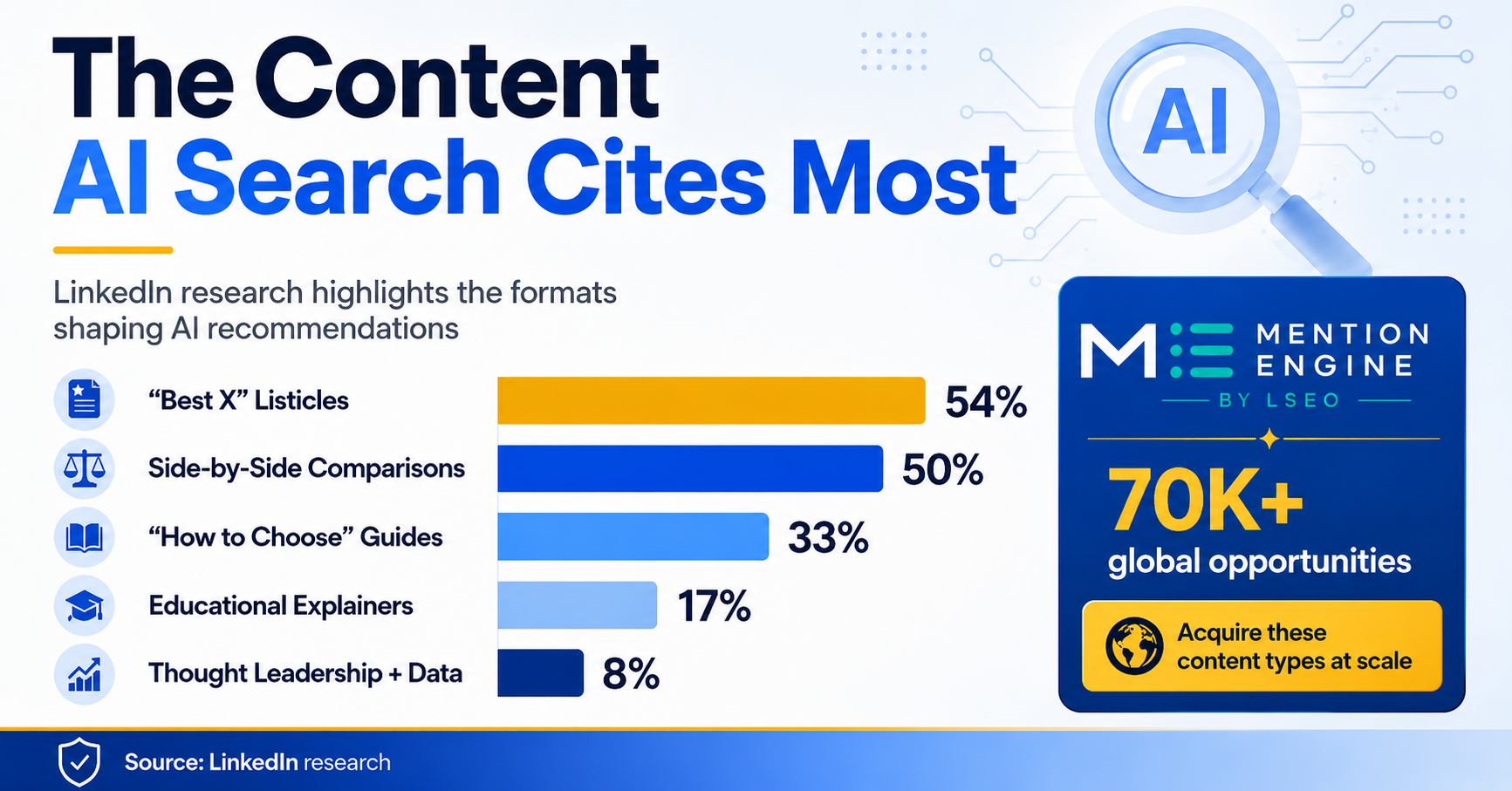
The most important digital marketing trend for 2026 is that brands are beginning to measure whether AI engines mention them at all. For years, marketers tracked rankings, impressions, clicks, and conversions. Now they also need to know whether ChatGPT, Gemini, Claude, Perplexity, and AI Overviews cite their pages, summarize their expertise, or recommend competitors instead.
We are seeing this change because users increasingly ask broad commercial questions such as “best payroll software for small businesses” or “how to choose a personal injury lawyer in Pennsylvania” directly inside AI interfaces. If your brand is absent from those answers, your traffic may decline even if your organic rankings remain stable. AI visibility is therefore not a vanity metric. It is an early indicator of future demand capture.
Tools that specialize in citation tracking and prompt analysis are becoming critical. LSEO AI gives website owners an affordable way to understand when and how their brands appear across the AI ecosystem and where competitors are taking share.
2. Generative Engine Optimization moves from niche to mainstream
GEO was a specialist topic in 2024 and 2025. In 2026, it is becoming mainstream because businesses finally understand that AI systems do not evaluate content exactly like classic ranking algorithms. Generative engines reward clarity, authority, corroboration, structured information, and content that directly resolves a user’s question. Thin blog posts built around awkward keyword repetition simply do not perform well in generative environments.
Effective GEO includes publishing expert-authored content, strengthening entity signals, improving internal linking, using consistent brand language, and creating pages that answer high-intent prompts in plain English. It also means making your site easier for machines to interpret through schema markup, updated authorship signals, product specifications, FAQs, and sourceable statistics.
For companies that want both platform support and strategic guidance, LSEO’s Generative Engine Optimization services align content, technical SEO, and AI discovery into one measurable framework.
3. First-party data becomes the foundation of performance marketing
Another defining 2026 marketing trend is the move away from modeled assumptions and toward first-party data. Privacy changes, attribution gaps, and cookie limitations have made marketing teams more cautious about platform-reported numbers. Smart brands are connecting their measurement strategy to owned data sources such as CRM records, Google Analytics 4, server-side tracking, and Google Search Console.
This matters even more in AI visibility because many new tools rely on estimates. Estimated metrics can be directional, but they are dangerous when budgets are tight. First-party integrations provide a more reliable picture of what content creates exposure, which prompts lead to site visits, and where branded authority overlaps with real business outcomes. That is one reason LSEO AI emphasizes direct GSC and GA integration. It gives marketing leaders cleaner reporting across traditional and generative search, which is exactly what budgeting and forecasting require.
4. Conversational search changes keyword research forever
Keyword research is not dead, but it is no longer enough on its own. In 2026, the best marketers map topics to natural-language prompts, comparison queries, follow-up questions, and problem statements. A user does not always search “best CRM software.” They may ask, “What CRM is easiest for a small team with no sales ops person?” That longer, richer question reveals intent far better than a short head term.
In my experience, brands improve performance fastest when they pair classic keyword data from tools like Semrush or Ahrefs with prompt-level intelligence. That combination shows both how people search and how they speak. It also leads to better page structures, stronger FAQs, and content that is easier for answer engines to extract.
Stop guessing what users are asking. Traditional keyword research isn’t enough for the conversational age. LSEO AI’s Prompt-Level Insights unearth the specific, natural-language questions that trigger brand mentions—or, more importantly, the ones where your competitors are appearing instead of you. The LSEO AI Advantage: Use 1st-party data to identify exactly where your brand is missing from the conversation. Get Started: Try it free for 7 days at LSEO.com/join-lseo/
5. Short-form video and search-driven video optimization converge
Video remains one of the strongest channels for reach, but the trend for 2026 is not simply “make more reels.” It is optimizing video for discovery, retention, and search intent simultaneously. YouTube continues to function as a search engine. TikTok influences product research. Instagram Reels supports awareness and remarketing. The highest-performing brands build one video asset, then adapt it for multiple platforms with channel-specific hooks, captions, metadata, and calls to action.
Search-driven video optimization means naming files clearly, writing descriptive titles, adding chapters, using transcripts, and matching video content to real customer questions. A home services brand, for example, can turn “when should I replace my roof” into a YouTube explainer, a TikTok myth-busting clip, and a supporting blog post. When those assets reinforce each other, they increase both search visibility and AI citation potential.
6. Zero-click search forces brands to optimize for influence, not just traffic
One of the hardest adjustments for marketers is accepting that strong performance does not always produce a click. Users can now get definitions, summaries, calculations, reviews, and product comparisons directly on the results page or in an AI interface. That means traffic may decline while brand influence rises.
The practical response is to optimize for outcomes beyond sessions. Track branded search lift, assisted conversions, citation frequency, email signups, demo requests, and direct visits. If your brand is repeatedly surfaced in AI answers, that visibility may shape the buying decision before a user ever lands on your site. Zero-click environments reward brands that publish quotable, clearly attributed, source-worthy material. They punish sites that offer generic commentary without evidence or expertise.
| Trend | What changes | What marketers should measure |
|---|---|---|
| AI visibility | Brands appear in generated answers before clicks happen | Citations, prompt share, branded search growth |
| Zero-click search | Users get answers without visiting websites | Assisted conversions, direct traffic, lead quality |
| First-party analytics | Platform estimates become less trustworthy | GSC, GA4, CRM attribution, revenue by source |
| Conversational search | Queries become longer and more specific | Prompt coverage, FAQ performance, content gaps |
7. Community-led content outperforms polished brand messaging
Consumers trust experience-rich content more than generic brand copy, and 2026 will push that trend even further. Reddit threads, expert commentary, customer stories, user-generated content, and practitioner-led articles are influencing both human buyers and AI models. Why? Because these formats contain nuance, objections, specifics, and real-world language that polished landing pages often miss.
That does not mean brands should abandon professional messaging. It means they should blend it with evidence from people who actually use the product or deliver the service. SaaS brands can publish implementation lessons from customer success teams. Ecommerce brands can feature detailed buyer guides and post-purchase reviews. Agencies can publish original frameworks based on campaign experience. This is where E-E-A-T becomes operational rather than theoretical.
8. CRM-driven personalization becomes more practical and more regulated
Personalization is no longer limited to inserting a first name into an email. In 2026, the stronger approach is segment-based personalization grounded in consented data. Marketers are tailoring landing pages, nurture flows, offers, and messaging based on lifecycle stage, industry, geography, and product interest. The technology is improving, but so is regulatory scrutiny.
That creates a tradeoff. Better personalization can improve conversion rates, but only when data governance is clean. Teams need clear consent practices, transparent privacy policies, and disciplined audience management. The brands that succeed are not the most aggressive data collectors. They are the most organized users of the data customers willingly share.
9. Search, PR, and brand authority become one strategy
In earlier years, PR built awareness while SEO captured demand. In 2026, those lines blur. Media mentions, expert quotes, podcast appearances, research reports, and high-authority backlinks all influence how search engines and AI systems understand your brand. Strong digital marketing teams now coordinate PR, content, and SEO around the same authority goals.
For example, a cybersecurity company that publishes an annual threat report can earn press coverage, attract links, rank for industry terms, and become a source cited by AI tools answering security-related questions. That is more efficient than treating each activity as a separate campaign. The key is consistency: one clear point of view, repeated across your website, off-site mentions, social distribution, and expert commentary.
10. Agentic SEO begins automating repetitive optimization work
The final trend to watch is the emergence of agentic SEO and GEO workflows. Agentic systems do not replace human strategy, but they can reduce the manual burden of monitoring prompts, identifying content gaps, clustering topics, refreshing pages, and surfacing technical issues. That matters because content decay and SERP volatility now move too quickly for static quarterly planning.
Moving from tracking to “Agentic” action. We aren’t just building a dashboard; we’re building the future of programmatic optimization. LSEO AI is evolving into an agentic platform that will help you manage your SEO and GEO signals automatically. It’s about more than just ranking—it’s about a long-term competitive advantage that works 24/7. The LSEO AI Advantage: The perfect blend of human insight and advanced AI. Get Started: Join the platform today at LSEO.com/join-lseo/
The best use case is augmentation. Let software handle continuous monitoring and pattern detection, while marketers make judgment calls about brand positioning, compliance, creative direction, and investment priorities. Used correctly, agentic workflows increase speed without sacrificing quality.
The top digital marketing trends for 2026 all point in the same direction: marketing is becoming more integrated, more data-driven, and more influenced by AI-mediated discovery. Brands need to think beyond rankings and clicks. They need to understand how customers ask questions, where AI systems source answers, how first-party data validates performance, and why authority now travels across search, PR, video, and community channels at the same time.
The companies that adapt fastest will be the ones that measure AI visibility, publish source-worthy content, build around conversational intent, and connect analytics to business outcomes. They will also recognize that modern search is not just about being found in Google. It is about being chosen across the entire digital ecosystem, including generative engines that increasingly shape buyer decisions before a visit ever occurs.
If you want a practical way to track citations, uncover prompt opportunities, and improve your brand’s visibility across both traditional and generative search, start with LSEO AI. It is one of the most affordable ways to bring clarity to AI performance without relying on vague estimates. For businesses that need deeper strategic support, LSEO remains a leading GEO company with the experience to turn AI visibility into measurable growth.
Frequently Asked Questions
1. What is the biggest digital marketing trend shaping 2026?
The biggest digital marketing trend in 2026 is the move from a keyword-first approach to a visibility-first strategy. In practical terms, that means brands can no longer focus only on ranking web pages in traditional search results and expect consistent growth. Consumers now discover brands across many environments, including Google, YouTube, TikTok, Reddit, Amazon, app ecosystems, AI assistants, comparison platforms, and social communities. As a result, the most successful marketers are building integrated systems that help their brands show up wherever customers are researching, asking questions, comparing options, and looking for proof.
This shift is also being accelerated by artificial intelligence. AI-powered search experiences and assistants increasingly summarize answers instead of simply listing links, which means visibility depends on authority, clarity, structured information, trusted brand signals, and broad digital presence. In 2026, winning brands are investing in content formats that travel well across channels, strengthening first-party data, improving product and brand information accuracy, and creating assets that can be cited, surfaced, and recommended in multiple ecosystems. The trend is bigger than SEO, bigger than paid media, and bigger than content production alone. It is about discoverability across the entire customer journey.
2. How is artificial intelligence changing digital marketing strategy in 2026?
Artificial intelligence is changing digital marketing strategy in 2026 by moving from a productivity tool to a core operational layer. Marketers are still using AI to speed up writing, ideation, reporting, audience analysis, and campaign testing, but the real transformation is happening at the strategic level. AI now influences how content is created, how audiences are segmented, how media is optimized, how customer service is delivered, and even how brands are discovered in AI-generated answer environments. That means marketers need to think not only about using AI internally, but also about how their brands are represented by AI externally.
One of the most important changes is the growing importance of machine-readable trust signals. AI systems favor clear, well-structured, consistent, and authoritative information. Brands that maintain strong product data, transparent messaging, expert-led content, reviews, FAQs, and cross-platform consistency are more likely to be surfaced accurately. At the same time, AI is improving campaign efficiency by enabling faster creative testing, predictive budget allocation, real-time personalization, and better lead scoring. However, the brands seeing the best results are not using AI to flood the internet with low-value content. They are using it to scale quality, improve relevance, and support human expertise. In 2026, AI is most effective when it strengthens strategy rather than replacing it.
3. Why are privacy regulations and first-party data so important for marketers now?
Privacy regulations and first-party data matter more than ever in 2026 because the digital advertising and measurement environment has become far less dependent on unrestricted tracking. Consumers are more aware of how their data is collected, regulators are enforcing stricter standards, and major platforms continue to limit third-party identifiers. This has forced marketers to build more direct, permission-based relationships with customers instead of relying on opaque data pipelines. As a result, first-party data has become one of the most valuable strategic assets a brand can own.
First-party data includes information customers willingly share through purchases, subscriptions, account creation, email engagement, loyalty programs, surveys, support interactions, and on-site behavior within compliant frameworks. When used responsibly, it enables better personalization, stronger audience segmentation, improved retention campaigns, and more resilient measurement. It also gives brands greater control in a fragmented platform landscape where attribution is harder and customer journeys are less linear. In 2026, strong marketers are not treating compliance as a burden. They are using privacy-first practices to build trust, improve data quality, and create more durable marketing systems. Clear consent, transparent policies, secure data handling, and value-driven exchanges are now essential to both performance and brand credibility.
4. What does platform fragmentation mean, and how should brands respond?
Platform fragmentation means that consumer attention is spread across a growing number of digital environments, each with its own discovery logic, audience behavior, content formats, and conversion pathways. People no longer move through a simple funnel that starts with a Google search and ends on a brand website. They may discover a product in a short-form video, validate it through creator opinions, compare it in a marketplace, ask an AI assistant for alternatives, and then convert through a retail platform or social storefront. This fragmented journey makes it harder for brands to rely on any single channel as their primary growth engine.
To respond effectively, brands need a channel-diversified strategy built around message consistency and format adaptability. That means understanding what role each platform plays in the customer journey, then tailoring content and measurement accordingly. A tutorial video, product comparison guide, expert quote, social proof asset, and structured product page may all support the same conversion, even if they appear in different places. In 2026, smart marketers are mapping visibility across search, social, video, marketplaces, AI interfaces, and owned channels rather than treating them as isolated tactics. They are also investing in reusable content systems, brand governance, and stronger analytics to understand assisted influence instead of chasing last-click attribution alone. Fragmentation is not just a challenge; it is an opportunity for brands that can stay coherent across many touchpoints.
5. What should businesses prioritize if they want to stay competitive in digital marketing through 2026?
Businesses that want to stay competitive through 2026 should prioritize strategic visibility, trustworthy data, adaptable content systems, and measurable business outcomes. The first priority is to understand where customers actually discover and evaluate solutions. That includes traditional search, AI answer engines, social media, review sites, marketplaces, communities, and commerce platforms. Once that landscape is clear, brands should create content and digital assets designed to perform across those environments, not just on a blog or landing page. This includes expert content, product information, comparison content, FAQs, videos, customer proof, and structured data that improves discoverability.
The second priority is operational maturity. Businesses need better first-party data strategies, privacy-safe measurement, stronger CRM integration, and more disciplined experimentation. They should also use AI thoughtfully to improve speed and relevance without sacrificing originality or brand trust. Finally, they need to align marketing more closely with business metrics such as qualified pipeline, customer acquisition efficiency, retention, and lifetime value. In 2026, the strongest brands are not necessarily the loudest. They are the ones with systems that make them easy to find, easy to trust, and easy to choose across every relevant digital touchpoint.